What is the science behind Box Breathing in stress management?
Box Breathing, also known as controlled breathing or square breathing, activates the parasympathetic nervous system, which helps reduce stress responses. This deliberate breathing pattern lowers cortisol levels and promotes relaxation by increasing oxygen flow to the brain, improving focus and reducing anxiety—key for electricians’ high-pressure tasks.
How can Box Breathing improve my performance as an electrician?
Box Breathing enhances mental clarity and concentration by stabilizing the heart rate and oxygenating the blood, which in turn optimizes cognitive function. For electricians working in high-pressure environments, this enhanced mental acuity and stress reduction can lead to more precise and safer task execution.
How often should electricians practice Box Breathing for best results?
Incorporating Box Breathing into your daily routine, such as practicing 3-5 minutes before beginning high-pressure tasks or during breaks, maximizes its anxiety-reducing effects. Consistent practice fosters greater resilience and adaptability, allowing electricians to handle challenging situations with increased calm and focus.
One wrong move around live electrical panels can cost you everything—but the real danger might be the stress clouding your judgment. Discover why 20% of electricians suffer mental health issues and how a simple 2-minute breathing technique used by Navy SEALs could save your life..
Key Takeaways:
- Box breathing (4-4-4-4 technique) provides immediate stress relief during high-pressure electrical tasks, helping electricians regain focus and control within just 2 minutes.
- Stress directly impacts safety performance, significantly reducing concentration and slowing reaction times during electrical emergencies, making stress management a critical safety protocol.
- One study found a 20.3% incidence of mental disorders among participating electricians due to occupational stressors including safety hazards, tight deadlines, and client pressures.
- Simple grounding exercises and mindful focus techniques can be performed on-site using existing tools and equipment, requiring no additional time or resources.
- Building long-term stress resilience through boundaries and support networks helps mitigate the significant number of lost working days in the construction industry due to stress-related issues, which in the UK, has been reported as 400,000 annually, though more recent figures suggest this number may be higher.
Working as an electrician means navigating constant pressure while maintaining razor-sharp focus. One moment of distraction can lead to serious injury or costly mistakes. The demanding nature of electrical work—with its safety hazards, tight deadlines, and problem-solving under pressure—creates a perfect storm for chronic stress that affects both performance and well-being.
Why Electricians Face Dangerous Stress Levels
The electrical trade presents unique challenges that push stress levels to dangerous heights. Research shows electricians experience a 20.3% incidence of mental disorders in one study, significantly higher than many other professions. The combination of high-risk environments, stringent safety requirements, and demanding physical labor creates a sustained state of heightened alertness that exhausts the nervous system over time.
Safety hazards dominate daily work life, from live electrical panels to confined spaces and elevated work areas. This constant vigilance against potential electrocution, falls, or equipment failures keeps the body’s stress response system activated throughout the workday. Add tight project deadlines, demanding clients, and the physical toll of heavy lifting and awkward positioning, and the stress load becomes overwhelming.
The construction industry loses approximately 400,000 working days annually in the UK due to stress, depression, and anxiety, though recent figures suggest this number may be higher. For electricians, this translates to reduced job satisfaction, increased turnover, and a cycle of burnout that affects entire crews. Reset Mind Hub’s specialized stress management approach addresses these industry-specific challenges with practical techniques designed for the realities of electrical work.
How Stress Kills Focus and Creates Safety Hazards
When stress levels spike, the brain’s executive functions—responsible for decision-making, attention, and problem-solving—become compromised. This neurological response directly impacts the precision and safety required in electrical work, creating a dangerous feedback loop where stress increases accident risk, which in turn amplifies stress levels.
1. Reduced Concentration Leading to Critical Errors
Chronic stress significantly reduces concentration capacity, making it difficult to maintain the laser focus required for electrical installations. Simple tasks like reading schematics, identifying wire colors, or calculating load requirements become error-prone when stress clouds mental clarity. These seemingly minor lapses can result in short circuits, equipment damage, or code violations that require expensive rework.
The perfectionist mindset common among skilled electricians compounds this problem. When small errors occur due to stress-related concentration lapses, the fear of making mistakes increases, creating additional mental pressure that further degrades focus. This cycle continues until even routine tasks feel overwhelming and mistake-prone.
Stress feels different for everyone. What's your type?
Take the free 2-minute Stress Reset Assessment and find out.
Take the Free Stress Test →2. Slower Reaction Times During Electrical Emergencies
Emergency situations demand split-second decisions and rapid responses. Stress hormones like cortisol, while initially helpful for alertness, actually slow reaction times when present chronically. An electrician dealing with an arc fault or electrical fire needs to react instantly—identifying the source, shutting off power, and implementing safety protocols without hesitation.
Stress-induced tunnel vision narrows peripheral awareness, making it harder to notice warning signs like unusual sounds, smells, or visual cues that precede electrical failures. This reduced situational awareness, combined with slower processing speeds, significantly increases the risk of electrical accidents and injuries.
Box Breathing: Your 2-Minute Reset Tool
Box breathing, also known as tactical breathing, provides immediate stress relief by activating the parasympathetic nervous system and lowering cortisol levels. This technique, used by Navy SEALs and emergency responders, offers electricians a practical way to regain control during high-pressure moments without leaving the job site.
The 4-4-4-4 Technique for Panel Changes
The box breathing pattern follows a simple four-count rhythm: inhale for 4 counts through the nose, hold for 4 counts, exhale for 4 counts through the mouth, hold empty for 4 counts. Repeat this cycle 5-8 times for maximum effectiveness. The structured counting provides mental focus while the controlled breathing regulates heart rate and blood pressure.
During panel changes or complex installations, use box breathing before beginning work to establish calm focus. The technique works particularly well when dealing with live electrical components where steady hands and clear thinking are essential. Even one minute of box breathing can provide noticeable clarity and reduce the physical symptoms of stress like rapid heartbeat or sweaty palms.
Practice the technique during low-stress moments to build muscle memory. This preparation ensures box breathing becomes an automatic response during high-pressure situations when stress might otherwise impair your ability to remember or execute the technique properly.
When and Where to Use Box Breathing On-Site
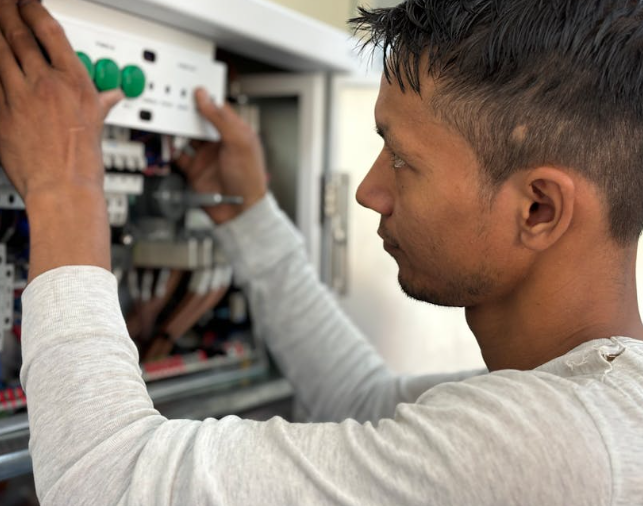
Box breathing fits naturally into the workflow of electrical work without requiring special equipment or extended breaks. Use it in your van before starting a challenging job, during brief pauses between tasks, or when transitioning from one work area to another. The technique works equally well in noisy environments—focus on the counting rather than trying to hear your breath.
Ideal moments include: before opening electrical panels, after receiving difficult news about project changes, when feeling overwhelmed by complex troubleshooting, and at the end of stressful days to prevent carrying tension home. The key is consistency—regular practice makes the technique more effective when you need it most.
Additional Quick Stress Techniques That Work
While box breathing forms the foundation of on-site stress management, several complementary techniques enhance your ability to maintain calm focus throughout demanding workdays. These methods require minimal time investment while providing maximum stress relief.
1. 4-7-8 Breathing for High-Anxiety Moments
The 4-7-8 breathing technique is highly effective for acute anxiety situations and deep relaxation. Inhale through the nose for 4 counts, hold for 7 counts, then exhale through the mouth for 8 counts with a “whooshing” sound. This extended exhale activates the vagus nerve more powerfully, providing rapid calm during moments of peak stress.
Use 4-7-8 breathing when facing unexpected safety hazards, receiving harsh client criticism, or dealing with equipment failures under tight deadlines. The technique’s quick effectiveness makes it perfect for brief moments between problem-solving steps when you need immediate mental reset.
2. Grounding Exercises Between Jobs
Grounding exercises help transition between different job sites and prevent stress accumulation throughout the day. The “5-4-3-2-1” technique engages the senses: identify 5 things you can see, 4 you can touch, 3 you can hear, 2 you can smell, and 1 you can taste. This sensory awareness pulls attention away from stress-inducing thoughts and anchors focus in the present moment.
Physical grounding works equally well—feel your feet in your work boots, notice the weight of your tool belt, or run your hands along a textured surface. These simple actions reconnect you with physical sensations and break the cycle of mental stress that builds throughout challenging workdays.
3. Using Tools and Equipment for Mindful Focus
Transform routine tool handling into mindfulness practice by paying deliberate attention to familiar objects. Spend 30 seconds focused entirely on your multimeter—its weight, texture, button placement, and display readout. This focused attention calms racing thoughts while reinforcing familiarity with essential equipment.
Organize your tool bag mindfully, feeling each tool’s unique characteristics and visualizing its specific function. This practice combines stress relief with practical preparation, making it an efficient use of transition time between tasks or jobs.
Building Long-Term Stress Resilience
Quick stress relief techniques address immediate symptoms, but lasting resilience requires systematic changes to work habits and lifestyle patterns. Building this foundation prevents stress accumulation and creates sustainable approaches to the inherent pressures of electrical work.
Setting Boundaries to Prevent Burnout
Effective boundaries protect both work quality and personal well-being. Establish clear “off” times when work calls and emails don’t receive immediate responses—emergency situations are truly rare and most issues can wait until the next business day. For self-employed electricians, this might mean charging premium rates for after-hours work to compensate for the disruption to personal time.
Learn to decline projects that consistently create excessive stress or don’t align with your capabilities and schedule. Taking on too much work leads to rushed jobs, increased errors, and damaged relationships with both clients and family. Quality work delivered on time builds better long-term success than overcommitment that leads to burnout.
Schedule regular breaks throughout workdays, even during busy periods. These brief pauses prevent the cumulative stress that builds when working for hours without respite. Use break time for stress management techniques rather than scrolling phones or engaging in stressful conversations.
Creating Support Networks in the Trade
Strong professional relationships provide both practical help and emotional support during challenging periods. Build connections with other electricians who understand the unique pressures of the trade—they can offer advice on difficult technical problems, recommend reliable suppliers, or simply provide someone to talk through frustrating situations.
Mentorship relationships benefit both experienced electricians and apprentices. Teaching others reinforces your own knowledge while creating meaningful connections, while learning from seasoned professionals provides perspective on managing long-term career challenges. These relationships often become sources of referrals and collaboration opportunities.
Consider joining professional associations or online communities where electricians share experiences and solutions. Having access to a broader network of professionals creates resources for both technical questions and career guidance, reducing the isolation that can amplify work-related stress.
Master Your Mental Game with the Grounded Spark Guide
Implementing these stress management techniques consistently transforms both work performance and quality of life for electricians at every career level. The combination of immediate relief tools like box breathing and long-term resilience strategies creates a complete approach to managing the unique pressures of electrical work.
Start with box breathing practice during low-stress moments to build familiarity, then gradually incorporate additional techniques as they become natural responses. Stress management isn’t about eliminating all pressure—it’s about maintaining clear thinking and steady performance when pressure is unavoidable.
The most successful electricians understand that mental tools are as important as physical tools for professional success. Just as you maintain your equipment for optimal performance, consistent stress management practices maintain mental clarity and focus for safe, efficient work throughout demanding careers.
For electricians ready to master specialized stress management techniques tailored specifically to the electrical trade, Reset Mind Hub offers targeted resources and guidance for building lasting mental resilience in high-pressure work environments.




Pingback: Daily Stress Reset Habits That Improve Mental Wellbeing - Reset Mind Hub