How does stress affect brain function?
Chronic stress impairs brain function by elevating cortisol levels, which can damage the prefrontal cortex. Counteract stress by practicing daily deep breathing exercises, which stimulate the Vagus Nerve, promoting relaxation and mental clarity
Can neuroplasticity improve mental health?
Yes, neuroplasticity enables the brain to reorganize itself, fostering resilience against mental health challenges. Engage in activities that challenge your brain, like learning a new language or playing an instrument, to enhance this neural flexibility.
What is the role of the Vagus Nerve in emotional regulation?
The Vagus Nerve regulates emotional balance by dampening the stress response. Incorporate mindfulness meditation in your routine to activate this nerve, thereby enhancing your emotional well-being.
If you’re an overthinker who’s tried breath-focused meditation and felt like you were failing, you’re not alone. These five alternative techniques offer different anchors for your attention—and research shows one method can reduce self-criticism and rewire your brain in as little as a week.
Key Takeaways
- Traditional breath-focused meditation can feel overwhelming for overthinkers, but alternative techniques like body scans and loving-kindness offer equally effective paths to mental clarity
- Sound meditation and visualization practices provide external anchors that make it easier to focus without the pressure of monitoring breath patterns
- Building a sustainable daily practice requires starting with just 3-5 minutes and linking meditation to existing habits like morning coffee or teeth brushing
- Research shows that non-breath meditation techniques can effectively reduce anxiety and improve emotional regulation, offering valuable alternatives to traditional methods
- Consistent practice of these alternative techniques can rewire the brain for better focus and reduced mental chatter, with some studies showing measurable changes in brain activity and structure in as little as a week, and more stable changes often observed after a few months of regular practice
For many high-performers and chronic overthinkers, the advice to “just focus on your breath” feels like adding another task to an already overwhelmed mind. The constant instruction to return attention to breathing can become a source of frustration rather than relief, especially when racing thoughts make even basic breath awareness feel impossible.
Why Traditional Breath-Focused Meditation Isn’t For Everyone
Breath-focused meditation works brilliantly for some people, but it can backfire for others. When someone’s mind is already spinning with anxiety or stress, trying to control or monitor breathing often creates additional mental pressure. Many overthinkers report feeling like they’re “failing” at meditation because their attention keeps drifting away from their breath, not realizing this is completely normal.
The good news is that meditation doesn’t require breath work to be effective. Alternative techniques can provide the same mental clarity and anxiety relief while offering different anchors for attention. Reset Mind Hub specializes in helping overthinkers find meditation approaches that actually work with their busy minds rather than against them.
For individuals prone to overthinking, non-breath-focused techniques can provide a more accessible entry point into meditation by offering different anchors for attention. This reduces the pressure often associated with breath counting and creates space for genuine relaxation and mental clarity to emerge naturally.
Body Scan Meditation: Ground Yourself by Noticing Sensations
Body scan meditation involves systematically bringing awareness to different parts of the body and noticing sensations without judgment. This technique grounds individuals in the present moment by shifting attention away from racing thoughts and toward physical sensations, which can help release tension and create immediate calm.
1. Start with Simple Head-to-Toe Awareness
Begin by sitting or lying comfortably and starting at the top of your head. Notice any sensations—warmth, coolness, tension, or tingling—without trying to change anything. Slowly move your attention down through your face, neck, shoulders, and continue through each body part. This systematic approach gives your mind a clear path to follow, making it easier than trying to focus on breath alone.
2. Notice Sensations Without Judgment
The key to effective body scanning is observing whatever sensations arise without labeling them as good or bad. If you notice tension in your shoulders, simply acknowledge it. If you feel nothing in a particular area, that’s perfectly fine too. This non-judgmental awareness helps break the cycle of mental criticism that often accompanies overthinking.
Stress feels different for everyone. What's your type?
Take the free 2-minute Stress Reset Assessment and find out.
Take the Free Stress Test →3. Use Contact Points as Anchors
Focus on areas where your body makes contact with surfaces—your feet on the floor, your back against a chair, or your hands resting on your legs. These contact points serve as reliable anchors that are always available and don’t require any special breathing technique. When your mind wanders, gently return attention to these grounding sensations.
Loving-Kindness (Metta): Build Compassion While Reducing Anxiety
Loving-kindness meditation cultivates feelings of warmth, compassion, and goodwill toward yourself and others through silent repetition of phrases. Research published in the Journal of Consulting and Clinical Psychology found that brief loving-kindness interventions significantly reduced self-criticism and increased self-compassion, making this technique particularly powerful for anxious minds.
1. Begin with Self-Directed Phrases
Start by placing a hand on your heart and silently repeating phrases like “May I be safe, may I be healthy, may I be happy, may I live with ease.” Spend 1-2 minutes here, allowing the words to sink in rather than rushing through them. If the phrases feel forced initially, imagine a warm light filling your chest area while you repeat them.
2. Expand to Loved Ones and Neutral People
After establishing self-compassion, bring to mind someone you care about deeply—a family member, friend, or even a pet. Offer them the same phrases: “May you be safe, may you be healthy, may you be happy.” Then move to a neutral person like a cashier or neighbor you’ve seen but don’t know well. This expansion helps shift focus outward while building emotional resilience.
3. Include Difficult Relationships for Growth
The most transformative part of loving-kindness practice involves extending compassion to someone challenging in your life. Start with someone mildly frustrating rather than your most difficult relationship. Wishing them freedom from suffering—”May you be happy, may you be free from pain”—can gradually dissolve resentment and reduce the mental energy spent on negative relationships.
Sound and Mantra Meditation: Shifting Focus Outward or Inward
Sound-based meditation techniques offer versatile alternatives that can direct attention either outward to environmental sounds or inward to repeated phrases. These methods work particularly well for people who find breath awareness challenging because they provide clear, engaging focal points.
Sound Meditation: Use Ambient Sounds as Your Anchor for an Outward Focus
Instead of trying to quiet external sounds, use them as meditation anchors. Sit quietly and listen to whatever sounds are present—traffic, birds, air conditioning, or voices. Notice the pitch, rhythm, and texture of sounds without judging them as good or bad. This practice develops present-moment awareness while reducing rumination by directing attention away from internal thought loops toward the immediate environment.
Mantra Meditation: Focus on a Repeated Phrase to Quiet the Mind
Choose a simple, neutral word or phrase like “peace,” “calm,” or “let go” and repeat it silently in rhythm with your natural breathing—or completely independent of breath if preferred. When thoughts arise, gently return to your chosen mantra. This technique gives the thinking mind something to do while creating space for deeper awareness to emerge naturally.
Visualization Meditation: Picture Your Way to Mental Clarity
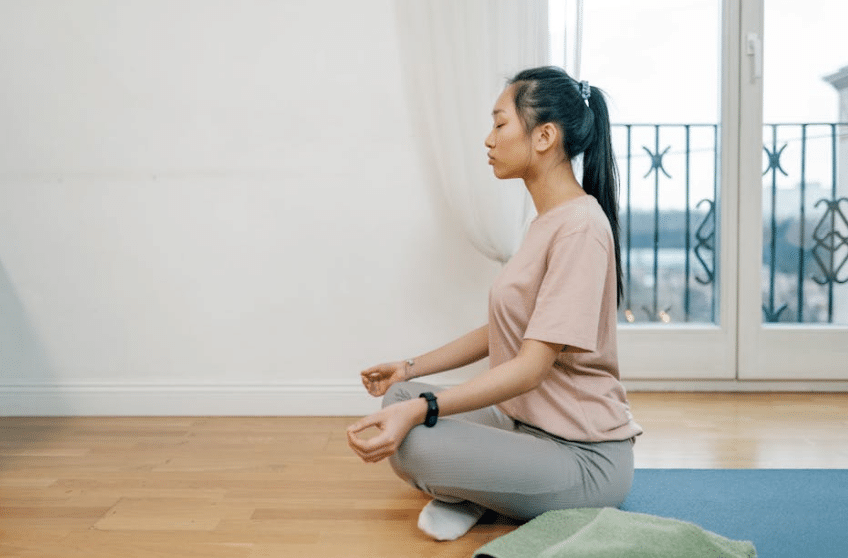
Visualization meditation harnesses the mind’s natural ability to create mental images, making it particularly effective for people who think visually. These techniques can ease racing thoughts and build positive momentum by engaging the imagination in constructive ways.
Growing Light Technique for Racing Thoughts
Imagine a small, warm light starting in your heart area and gradually expanding with each natural breath (or simply over time if you prefer to avoid breath focus). Picture this light slowly filling your entire body, then extending beyond into the space around you. This visualization gives racing thoughts somewhere constructive to go while creating feelings of expansion and calm.
Peaceful Scene Visualization for Instant Calm
Picture yourself in a place where you feel completely safe and relaxed—perhaps a beach, forest, or cozy room. Engage all your senses by imagining what you would see, hear, smell, and feel in this space. This technique works quickly because it activates the same neural pathways as actually being in a peaceful environment, helping to shift your nervous system into a calmer state.
Building Your Daily Practice Without the Morning Overwhelm
Creating a sustainable meditation practice requires strategic planning rather than relying on motivation alone. The key is removing barriers and making the practice so simple that skipping it feels harder than doing it.
1. Start with 3-5 Minutes Maximum
Resist the urge to meditate for longer periods initially. Short, consistent sessions build the neural pathways more effectively than sporadic longer practices. Three minutes of daily meditation creates more lasting change than 20-minute sessions done only occasionally. This approach prevents the overwhelm that often derails new meditation habits.
2. Link to Existing Habits Like Coffee or Teeth Brushing
Attach your meditation practice to something you already do automatically every day. Meditate right after brewing your morning coffee, before checking your phone, or immediately after brushing your teeth. This habit stacking technique uses existing neural pathways to make the new behavior more automatic.
3. Track Your Progress for Consistency
Use a simple calendar, app, or journal to mark off successful meditation days. Research shows that habit formation typically takes around 66 days on average, though some people establish new patterns sooner. Visual progress tracking maintains motivation during the initial weeks when the practice doesn’t yet feel automatic.
Reset Mind Hub Offers Proven Systems for Overthinkers Ready to Find Their Calm
These five breath-free meditation techniques provide multiple pathways to daily mental clarity without the frustration that often accompanies traditional breath-focused practices. Whether you gravitate toward the grounding nature of body scans, the heart-opening quality of loving-kindness, the engaging focus of sound meditation, or the creative aspects of visualization, the key is choosing one technique and practicing it consistently for at least three weeks.
Remember that meditation isn’t about stopping thoughts or achieving a blank mind—it’s about changing your relationship with your thoughts and building resilience against mental overwhelm. Each of these techniques trains your attention in slightly different ways, but all lead to the same destination: a calmer, clearer, more focused mind that serves you rather than sabotages you.
The most important step is simply beginning, even if it’s just three minutes of body scanning while your morning coffee brews.
For overthinkers ready to find meditation techniques that actually work with busy minds, Reset Mind Hub provides structured, proven systems that transform mental chaos into lasting clarity.



Pingback: Can a Sleep Schedule Cure Brain Fog? Timing & Consistency Impacts - Reset Mind Hub