Can’t sleep because your mind won’t stop racing? There’s a surprisingly simple solution that’s backed by science—and it has nothing to do with meditation apps or sleep supplements. The secret lies in what happens to your brain during repetitive tasks.
- Adult coloring books improve sleep by providing repetitive tasks that interrupt rumination and mental overactivity, helping quiet racing thoughts before bed
- The repetitive motions of coloring create a flow state that calms the amygdala and shifts the nervous system from stress response to relaxation mode
- Mandalas, nature-based designs, and guided relaxation pages work best for pre-sleep routines when used 30-90 minutes before bed
- Scientific research shows coloring can lower heart rate, reduce stress hormones, and trigger the body’s natural relaxation response
- Creating a screen-free coloring ritual provides a healthy alternative to late-night scrolling while supporting better sleep quality
For millions of adults struggling with sleep difficulties, the culprit often isn’t physical discomfort but mental overactivity. Racing thoughts, endless worry loops, and persistent rumination create a barrier between busy minds and restful sleep. While traditional sleep advice focuses on bedroom temperature and caffeine cutoffs, a growing body of research points to a surprisingly simple solution: adult coloring books.
Why Racing Thoughts Keep You Awake
The modern mind rarely gets a chance to truly rest. Even when the body settles into bed, thoughts continue churning through tomorrow’s meetings, unfinished tasks, and endless what-if scenarios. This mental chatter activates the sympathetic nervous system, keeping the body in a state of alertness that’s fundamentally incompatible with sleep.
Racing thoughts trigger a cascade of physiological responses that work directly against sleep. The heart rate stays elevated, stress hormones like cortisol remain high, and the brain continues producing the alertness chemicals that should naturally decline as bedtime approaches. This creates a vicious cycle where worry about not sleeping feeds more anxious thoughts, making sleep even more elusive.
The challenge becomes finding an activity that’s engaging enough to interrupt these thought patterns without being so stimulating that it prevents sleep altogether. Traditional relaxation techniques like meditation can feel impossible when the mind is already racing, while screen-based activities introduce blue light that further disrupts natural sleep rhythms.
How Repetitive Tasks Break the Rumination Cycle
Adult coloring works as a sleep aid precisely because it occupies just enough mental bandwidth to crowd out anxious thoughts without overstimulating the brain. Reset Mind Hub explains how this repetitive activity creates the ideal conditions for transitioning from mental overactivity to restful sleep. The simple, predictable motions of coloring provide the mind with a gentle anchor that interrupts rumination almost by default.
Creating Flow State to Crowd Out Anxious Thoughts
When engaged in coloring, the brain enters what psychologists call a “flow state” – a condition of relaxed focus where attention becomes fully absorbed in the present moment. This state occurs naturally when an activity provides just the right balance of structure and choice. Coloring pages offer clear boundaries and patterns to follow, while still allowing personal decisions about color selection and artistic expression.
In this flow state, there’s simply no mental space left for worrying about tomorrow’s presentation or replaying today’s awkward conversation. The mind becomes occupied with immediate, concrete decisions: Should this leaf be green or blue? How can this pattern connect to that one? These simple choices require just enough attention to prevent the brain from wandering into anxiety-provoking territory.
Stress feels different for everyone. What's your type?
Take the free 2-minute Stress Reset Assessment and find out.
Take the Free Stress Test →Calming the Amygdala Through Present-Moment Focus
The amygdala, often called the brain’s “alarm system,” becomes hyperactive during periods of stress and anxiety. This small but powerful brain region scans constantly for threats, real or imagined, and triggers the fight-or-flight response that keeps people awake at night. Coloring helps calm this overactive system by shifting attention away from future worries and past regrets toward immediate, non-threatening stimuli.
Present-moment activities like coloring send signals to the amygdala that the environment is safe. The brain interprets the calm, methodical nature of filling in patterns as evidence that no immediate action is needed. This biological shift from threat detection to relaxed awareness creates the neurological foundation necessary for sleep preparation.
Triggering the Body’s Natural Relaxation Response
Repetitive activities have a unique ability to activate the parasympathetic nervous system – the body’s “rest and digest” mode that prepares for sleep. The rhythmic motions of coloring, combined with the steady breathing that naturally accompanies focused activity, trigger a measurable relaxation response. Heart rate slows, muscle tension decreases, and stress hormones begin to decline.
This physiological shift occurs because the brain interprets repetitive, non-threatening activities as signals that the day’s challenges have ended. Unlike problem-solving or planning activities that keep the mind alert and engaged, coloring provides a clear message that it’s time to wind down.
The Science Behind Coloring’s Sleep Benefits
Research into adult coloring’s therapeutic benefits has revealed measurable changes in both psychological and physiological markers of stress and relaxation. Studies measuring cortisol levels, heart rate variability, and brain wave patterns show consistent improvements in participants who engage in regular coloring sessions, particularly when used as part of an evening routine.
Lower Heart Rate and Stress Response
Clinical measurements demonstrate that coloring sessions lasting 20-30 minutes can produce significant reductions in heart rate and blood pressure. These changes occur because the repetitive nature of the activity triggers the body’s relaxation response, counteracting the physiological arousal that keeps people awake. The slow, steady movements required for coloring naturally synchronize with deeper, more relaxed breathing patterns.
Participants in coloring studies also show decreased levels of cortisol, the primary stress hormone that interferes with sleep. Unlike activities that require intense concentration or problem-solving, coloring allows cortisol levels to drop naturally while still keeping the mind gently occupied. This creates the ideal biochemical environment for transitioning into sleep.
Shifting from Sympathetic to Parasympathetic Nervous System
Perhaps most importantly for sleep quality, coloring facilitates the crucial shift from sympathetic nervous system activation (the body’s alert, action-ready state) to parasympathetic dominance (the calm, restorative state necessary for sleep). This transition typically happens naturally as evening approaches, but stress and mental overactivity can prevent or delay this important biological process.
The gentle, predictable nature of coloring helps override stress-induced sympathetic activation. As the nervous system shifts into parasympathetic mode, digestion improves, blood pressure drops, and the body begins producing the neurochemicals associated with rest and recovery. These changes create a biological foundation that makes falling asleep significantly easier.

Best Coloring Pages for Pre-Sleep Routines
Not all coloring pages are equally effective for promoting sleep. The ideal pre-bedtime designs balance visual interest with simplicity, providing enough structure to hold attention without creating frustration or overstimulation. The key is finding patterns that feel naturally calming and can be completed within a reasonable timeframe.
1. Mandalas and Symmetrical Patterns – Finding the Right Level of Detail
Mandala designs work exceptionally well for sleep preparation because their circular, symmetrical patterns naturally promote a sense of balance and completion. The repetitive nature of mandala coloring creates a meditative rhythm that’s particularly effective at interrupting anxious thought patterns. However, the level of detail matters significantly when using mandalas for bedtime routines.
Choose mandala designs with medium complexity – intricate enough to hold attention but not so detailed that they require intense concentration or cause eye strain in low light. Patterns with larger sections and flowing lines work better than designs with tiny, intricate details that might create frustration late at night. The goal is gentle engagement, not artistic challenge.
2. Nature-Based Designs
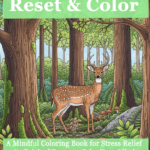
Natural themes like forests, ocean waves, garden scenes, and botanical patterns tap into the inherently calming effects of nature imagery. These designs often feature organic, flowing lines that mirror the gentle rhythms found in natural environments. The psychological association with peaceful outdoor settings can improve the relaxation response even when coloring indoors.
Nature-based coloring pages also offer intuitive color choices that don’t require much decision-making. Leaves can be green, flowers can be their natural hues, and water can be blue – removing the mental effort of choosing unexpected color combinations. This simplicity allows the mind to focus on the soothing motions of coloring rather than complex artistic decisions.
3. Guided Relaxation Pages with Gentle Prompts
Some coloring books specifically designed for relaxation include gentle prompts or affirmations integrated into the designs. These might feature phrases like “breathe deeply” or “let go” woven into the patterns, or simple instructions for breathing exercises to do while coloring. These guided elements can improve the sleep-promoting benefits by combining visual focus with explicit relaxation cues.
Look for pages that incorporate elements specifically chosen for their calming properties: soft curves rather than sharp angles, flowing patterns rather than geometric precision, and positive imagery that promotes feelings of safety and peace. These design choices work subconsciously to support the nervous system’s transition into rest mode.
Creating an Effective Screen-Free Wind-Down Ritual
The power of coloring for sleep improvement multiplies when it becomes part of a consistent, screen-free evening routine. Creating the right environment and timing transforms a simple activity into a powerful sleep preparation ritual that signals to both mind and body that the day is ending.
Timing: Aim for 30-90 Minutes Before Bed
The optimal timing for pre-sleep coloring depends on individual sleep patterns and the time needed to feel drowsy. Starting 30-90 minutes before intended bedtime allows enough time for the relaxation response to develop while avoiding the risk of becoming too alert from extended activity. Most people find that 20-30 minutes of coloring provides sufficient mental transition time.
Consistency matters more than duration. A brief 15-minute coloring session performed at the same time each night will be more effective than longer, irregular sessions. The brain learns to associate this activity with sleep preparation, making the relaxation response stronger and faster over time.
Environment Setup for Maximum Relaxation
Lighting plays a crucial role in maximizing coloring’s sleep benefits. Warm, dim lighting supports the body’s natural melatonin production while providing enough illumination for comfortable coloring. Table lamps with soft bulbs work better than overhead lighting, and some people find that salt lamps or other warm-toned lighting creates the ideal ambiance.
Keep coloring supplies simple and easily accessible. Having a dedicated basket with colored pencils, fine-tip markers, and a selection of appropriate coloring books removes barriers to starting the routine. Choose coloring tools that work smoothly and quietly – scratchy pencils or squeaky markers can be jarring in a quiet evening environment.
The physical environment should support relaxation in every way possible. A comfortable chair with good back support, a small side table for supplies, and perhaps soft background music or nature sounds can improve the overall experience. Some people prefer complete silence, while others find that gentle instrumental music or white noise helps maintain focus on the coloring activity.
Start Your Sleep-Supporting Coloring Practice Tonight
Beginning a coloring practice for better sleep requires no special equipment or training – just a willingness to try something different from the usual bedtime routine. Start with simple expectations and allow the practice to develop naturally over time. The first few sessions might feel awkward or unfamiliar, but most people notice improvements in their ability to quiet racing thoughts within a week of consistent practice.
Choose coloring pages that genuinely appeal to personal taste preferences. Some people gravitate toward geometric patterns, while others prefer natural scenes or abstract designs. The most important factor is selecting images that feel personally calming and inviting rather than challenging or stressful.
Keep in mind that this practice works best as part of a broader commitment to good sleep hygiene. Combining coloring with other sleep-supporting habits like limiting evening screen time, keeping the bedroom cool, and maintaining consistent sleep schedules will amplify the benefits of each individual practice.
For more guidance on using coloring as a tool for stress relief and better sleep, Reset Mind Hub offers evidence-based resources and techniques for improving mental well-being through mindful activities.