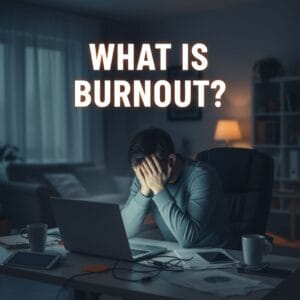
So, what is burnout? You know that feeling when sleep doesn’t restore you anymore and Monday morning dread has become every morning dread? There’s a crucial difference between being tired and being burned out—and high-performers are often the last to recognize which side of that line they’ve crossed.
- Burnout is chronic workplace stress that hasn’t been successfully managed – characterized by emotional exhaustion, cynicism, and reduced professional effectiveness, according to the WHO’s three-part definition.
- Normal fatigue improves with rest, while burnout involves deeper depletion that doesn’t resolve easily, often accompanied by feelings of detachment and persistent physical symptoms.
- High-performers are most vulnerable due to perfectionism, boundary dissolution, and the stress-engagement trap that keeps them pushing despite warning signs.
- Effective recovery requires interrupting stress cycles daily and addressing root causes rather than just treating symptoms through nervous system reset strategies.
- Physical symptoms like chronic fatigue and digestive issues often signal that your body is demanding attention before complete breakdown occurs.
When exhaustion becomes your constant companion and rest no longer restores you, the line between normal tiredness and burnout becomes critically important to understand. This distinction could be the key to preventing a complete breakdown and reclaiming your energy.
The Persistent Exhaustion That Rest Won’t Fix
Burnout doesn’t announce itself with dramatic fanfare. Instead, it creeps in quietly, masquerading as temporary stress or a busy season that will eventually pass. What starts as occasional tiredness gradually transforms into a pervasive exhaustion that sleep cannot cure.
This type of depletion goes beyond physical fatigue. Burnout creates a profound sense of being emotionally overextended and depleted of emotional resources. Unlike the refreshing relief that follows a good night’s sleep when you’re simply tired, burnout leaves you waking up already drained, facing the day with a heavy sense of dread or detachment.
The persistent nature of burnout exhaustion stems from chronic stress that has overwhelmed your body’s recovery systems. Your nervous system becomes stuck in a state of hypervigilance, making it difficult to truly rest even when you have the opportunity. This creates the frustrating “wired but tired” feeling where your body craves rest but cannot achieve genuine relaxation.
How Burnout Differs From Normal Tiredness
Normal Fatigue vs. Chronic Emotional Depletion
Normal fatigue serves as a healthy signal that your body needs rest and recovery. After a challenging workout, a long day at work, or inadequate sleep, typical tiredness responds predictably to rest, proper nutrition, and time. You feel refreshed after a weekend, energized after vacation, and restored after adequate sleep.
Chronic emotional depletion operates differently. Even after rest periods, the exhaustion persists. You might sleep for ten hours and still wake up tired. Weekend breaks don’t restore your energy levels. Vacation time helps temporarily, but the heaviness returns quickly upon resuming normal activities.
A key psychological difference emerges in your relationship with stress itself. When experiencing normal stress, you often feel hyper-engaged and urgent about completing tasks. With burnout, you tend to feel disengaged, numb, and emotionally distant from work and relationships that once mattered to you.
Stress feels different for everyone. What's your type?
Take the free 2-minute Stress Reset Assessment and find out.
Take the Free Stress Test →The WHO’s Three-Part Definition of Burnout
The World Health Organization provides a clear framework for understanding burnout as a syndrome resulting from chronic workplace stress that hasn’t been successfully managed. This definition includes three distinct dimensions that work together to create the burnout experience.
Energy depletion or exhaustion represents the most recognizable aspect of burnout. This goes beyond normal tiredness to include emotional, mental, and physical exhaustion that doesn’t improve with typical rest and recovery methods.
Increased mental distance or cynicism toward work manifests as feelings of negativism about your job, colleagues, or the value of your efforts. This emotional detachment serves as a protective mechanism when you feel overwhelmed and unsupported.
Reduced professional efficacy reflects diminished feelings of competence and achievement at work. Tasks that once felt manageable become overwhelming, and your confidence in your abilities begins to erode despite potentially maintaining actual performance levels.
Why Burnout Is Limited to Occupational Context
The WHO specifically categorizes burnout as an “occupational phenomenon” rather than a medical condition, highlighting its strong connection to workplace environments and management practices. This classification shows that burnout stems from organizational and environmental factors rather than personal failings or individual weakness.
However, burnout-like symptoms can certainly occur outside traditional employment settings. Parents, caregivers, students, and entrepreneurs often experience similar patterns of chronic stress, emotional exhaustion, and reduced effectiveness in their respective roles. The underlying mechanism remains the same: chronic stress without adequate recovery and support systems.
Understanding this occupational focus helps reduce self-blame and shame often associated with burnout. Recognizing burnout as a systemic issue rather than a personal failing opens pathways to more effective solutions and recovery strategies.
Warning Signs Your Mind Is Overwhelmed
1. Brain Fog and Decision Paralysis
Mental burnout significantly impairs cognitive functions, making even simple decisions feel overwhelming. Brain fog manifests as difficulty concentrating, forgetfulness, and slower information processing. You might read the same paragraph multiple times without absorbing the content or find yourself staring at your computer screen without being able to focus.
Decision paralysis becomes particularly pronounced when your mental resources are depleted. Choices that once seemed straightforward – like what to eat for lunch or which task to tackle first – suddenly feel monumentally difficult. This cognitive overload occurs because burnout compromises the brain’s executive functioning, making it harder to prioritize, organize, and execute decisions efficiently.
Studies indicate that burnout can impair concentration, memory, and decision-making abilities, transforming routine tasks into sources of stress and confusion. This creates a frustrating cycle where decreased cognitive performance leads to increased self-criticism and additional stress.
2. Emotional Numbness or Heightened Irritability
Emotional regulation becomes significantly more challenging during burnout, leading to two seemingly opposite but equally concerning patterns. Some people experience emotional numbness, feeling disconnected from activities, relationships, and goals that previously brought joy and meaning. This detachment serves as a protective mechanism when emotional resources are depleted.
Conversely, others experience heightened irritability and emotional reactivity. Small inconveniences trigger disproportionate responses, and patience with colleagues, family members, or even minor technical difficulties evaporates quickly. This hyperreactivity reflects an overstimulated nervous system struggling to manage daily stressors.
Both patterns indicate that your emotional system is overwhelmed and operating in survival mode. The capacity for emotional nuance, empathy, and balanced responses becomes compromised when you’re running on empty emotional reserves.
3. Cynicism Toward Work and Relationships
Cynicism represents one of the core components of burnout, manifesting as increased mental distance from work responsibilities and skepticism about the value or impact of your efforts. This protective detachment develops when you feel unsupported, undervalued, or trapped in situations beyond your control.
Workplace cynicism might sound like “What’s the point?” or “Nothing I do matters anyway.” This mindset extends beyond professional settings, potentially affecting personal relationships and activities that once felt meaningful. The cynicism serves as emotional armor against further disappointment and hurt.
Healthcare workers during the pandemic demonstrated significant increases in both emotional exhaustion and cynicism, illustrating how prolonged high-stress environments contribute to this protective but isolating response. Recognizing cynicism as a burnout symptom rather than a character flaw helps in developing appropriate recovery strategies.
Physical Symptoms That Demand Attention
Chronic Fatigue That Sleep Can’t Cure
Physical burnout symptoms often provide the clearest signals that your body is operating beyond sustainable limits. Chronic fatigue represents more than occasional tiredness – it’s a persistent, bone-deep exhaustion that doesn’t respond to normal rest and recovery methods.
This type of fatigue manifests as waking up tired despite adequate sleep, feeling physically heavy throughout the day, and requiring significantly more effort to complete routine tasks. Your body may feel like it’s running on emergency reserves, creating that familiar “running on empty” sensation.
Muscle tension becomes chronic, particularly in the neck, shoulders, and back, as your body maintains a constant state of alertness. Headaches increase in frequency and intensity, often stemming from this persistent muscular tension and stress. These physical symptoms represent your body’s attempt to communicate that current stress levels are unsustainable.
Digestive Issues and Compromised Immunity
The gut-brain connection means that chronic stress significantly impacts digestive function. Burnout commonly triggers stomach problems, including nausea, digestive irregularities, and changes in appetite. Some people lose interest in food entirely, while others find themselves eating more or differently than usual as a coping mechanism.
Compromised immunity represents another serious physical consequence of prolonged stress. Your body’s ability to fight off infections decreases when cortisol and other stress hormones remain elevated for extended periods. This manifests as frequent colds, slower healing from minor injuries, and generally feeling more susceptible to illness.
Sleep disturbances compound these physical symptoms, creating a cycle where poor sleep quality worsens stress tolerance, which further disrupts sleep patterns. You might experience difficulty falling asleep, frequent awakening, or early morning waking despite feeling unrefreshed.
Why High-Performers Are Most Vulnerable
The Stress-Engagement Trap
High-performing individuals often fall into the stress-engagement trap, mistaking chronic stress activation for productive engagement. The adrenaline and urgency that accompany high-stress situations can feel energizing and purposeful, making it difficult to recognize when stress levels have become unsustainable.
This trap becomes particularly dangerous because high-performers typically receive positive reinforcement for pushing through fatigue and stress. Success often comes from exceeding normal limits, creating a pattern where rest and recovery feel like laziness or lack of commitment rather than necessary maintenance.
The biochemical rewards of achievement – dopamine, adrenaline, and sense of accomplishment – can mask the underlying depletion occurring at deeper levels. By the time physical and emotional symptoms become undeniable, significant damage to stress tolerance and recovery capacity may have already occurred.
When Boundaries Disappear
Successful people often achieve their goals by being available, responsive, and willing to take on additional responsibilities. However, this flexibility can gradually erode boundaries between work and personal time, between urgent and important tasks, and between reasonable and excessive demands.
Technology compounds this boundary dissolution by making constant availability seem normal and expected. Emails arrive at all hours, work thoughts intrude during personal time, and the pressure to respond quickly creates chronic low-level stress that never fully resolves.
Without clear boundaries, recovery time disappears entirely. The nervous system never gets the signal that it’s safe to relax and restore, leading to the “always on” state that characterizes burnout. Even during supposed downtime, the mind remains partially engaged with work concerns and future responsibilities.
Perfectionism as a Burnout Accelerator
Perfectionist tendencies, while often contributing to high achievement, significantly accelerate burnout development. The internal pressure to meet impossibly high standards creates chronic dissatisfaction, even with objectively successful outcomes.
Perfectionists struggle with delegation, feeling that others won’t meet their standards, leading to increased workload and responsibility. They also have difficulty recognizing “good enough” completion points, continuing to refine and improve work well beyond diminishing returns.
The fear of making mistakes or appearing incompetent drives perfectionists to over-prepare, over-work, and over-commit to demonstrating their capabilities. This creates a relentless internal pressure that makes rest feel impossible and mistakes feel catastrophic, accelerating the path toward complete burnout.
Nervous System Reset Strategies That Actually Work
1. Interrupt the Stress Cycle Daily
Effective burnout recovery requires deliberately interrupting the stress cycle rather than waiting for natural breaks that may never come. This means building micro-recovery moments throughout your day, even when it feels counterproductive or unnecessary.
Simple practices like deep breathing exercises, brief walks, or stepping away from screens for five minutes help signal to your nervous system that it’s safe to shift out of emergency mode. The key lies in consistency rather than duration – frequent small resets prove more effective than occasional longer breaks.
Physical movement particularly helps discharge stress hormones and tension that accumulate in the body. Even simple stretches, shoulder rolls, or walking to a different room can help interrupt the physiological stress response and create space for recovery.
2. Rebuild Your Recovery Capacity
Recovery capacity isn’t automatic – it’s a skill that needs to be rebuilt when burnout has compromised your natural restoration processes. This involves gradually retraining your nervous system to recognize and respond to rest opportunities.
Start with extremely low-pressure activities that require minimal decision-making or performance. This might include listening to music, sitting in nature, taking warm baths, or engaging in simple, repetitive activities that allow your mind to truly disengage from problem-solving mode.
Protect your sleep environment and routines with the same intensity you would protect important work deadlines. Quality sleep serves as the foundation for all other recovery efforts, making it non-negotiable rather than optional when convenient.
3. Address Root Causes, Not Just Symptoms
While symptom management provides important relief, sustainable burnout recovery requires addressing the underlying causes that created the depletion in the first place. This often involves difficult conversations about workload, boundaries, and expectations with supervisors, family members, or yourself.
Examine your relationship with productivity and achievement, questioning whether current standards are realistic and sustainable long-term. Many high-performers need to recalibrate their definition of success to include well-being and sustainability alongside traditional metrics.
Consider whether your current environment supports recovery and growth or continues to demand more than you can sustainably provide. Sometimes recovery requires making significant changes to work situations, living arrangements, or relationship dynamics that perpetuate chronic stress.
Reset Mind Hub: Your Resource for Mental Clarity and Emotional Balance
Understanding the difference between normal fatigue and burnout represents the first step toward reclaiming your energy and effectiveness. The path from burnout to sustainable well-being requires patience, self-compassion, and often professional guidance to handle the complex interplay of physical, emotional, and environmental factors.
Recovery doesn’t happen overnight, but recognizing the warning signs early and implementing nervous system reset strategies can prevent complete breakdown and accelerate healing. Remember that seeking support isn’t a sign of weakness – it’s an intelligent strategy for preserving your most important resource: your health and well-being.
The path forward involves building sustainable rhythms of engagement and recovery, establishing protective boundaries, and creating environments that support both achievement and restoration. Your future self will thank you for taking these warning signs seriously and making the necessary changes now.
For detailed resources on nervous system regulation and mental clarity strategies, visit Reset Mind Hub where expert guidance helps high-performers and overthinkers build sustainable practices for long-term well-being.