Memorize Anything in Order – Using Places You Already Know
You already have the perfect memory tool. You just haven’t used it yet.
Your brain remembers places better than words. The memory palace technique uses that wiring to help you store facts, lists, speeches, names, and study material – by linking them to familiar spots in your mind.
Also called the method of loci, this approach pairs spatial memory with vivid mental images. The result: faster recall, stronger retention, and a system you can use anywhere.
Here’s exactly how to do it.
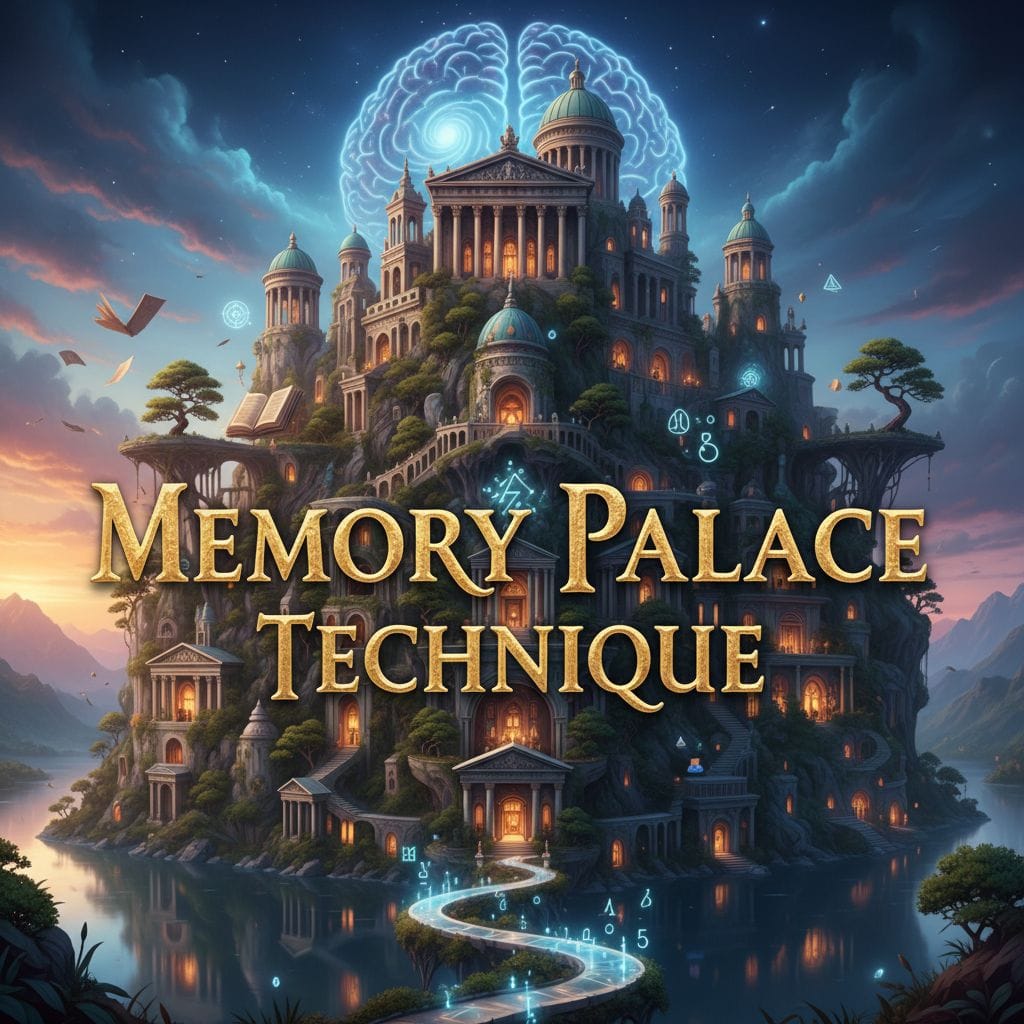
What Is a Memory Palace?
A memory palace is a mental location you use to organize information in a specific order. Pick somewhere you already know well – your home, your office, your commute – then place each item you want to remember at a specific spot along that path.
When you need to recall the information, you mentally walk through the place. Each stop triggers the image you stored there.
This makes it especially useful for lists, presentations, study topics, and anything with a sequence.
Stress feels different for everyone. What's your type?
Take the free 2-minute Stress Reset Assessment and find out.
Take the Free Stress Test →How It Works
Your brain is wired to remember places. Attaching information to locations creates a stronger mental structure than repeating words alone.
It works even better when the images are unusual, emotional, exaggerated, or funny. The stranger the image, the easier it sticks.
How to Build a Memory Palace
You can start right now with a place you already know.
Step 1: Choose a familiar location
Your house, apartment, office, classroom, or daily commute all work well.
Step 2: Pick a fixed route
Choose a path with clear stopping points. Example: front door, sofa, kitchen table, sink, bedroom.
Step 3: Assign one item to each stop
Take the information you want to remember and place one piece at each location. Keep the order consistent.
Step 4: Turn each item into a vivid image
Don’t store the item as a plain word. Make it visual. If the item is “milk,” imagine a giant bottle of milk flooding the room. If it’s “phone,” picture the phone ringing underwater.
Step 5: Walk the route mentally
Move through each location in order. Each stop triggers the image you placed there.
Step 6: Review a few times
A quick mental walk strengthens the path. Two or three reviews make recall feel automatic.
Quick Example
You want to remember five items: milk, keys, book, phone, shoes.
Each item is tied to a fixed spot. The sequence sticks because the place already lives in your memory.
Best Uses
The memory palace works best for information with structure or order:
If you need deep understanding first, learn the material, then use a memory palace to lock in the key points.
Tips for Faster Recall
Stronger images mean faster recall. Use these principles:
Start small. A palace with 5 to 10 items beats a complicated route every time.
Common Mistakes
Memory Palace vs. Flashcards
Flashcards work well for repetition and definitions. A memory palace works better for ordered recall and fast retrieval.
The two pair well together. Use flashcards to understand the material, then use a memory palace to lock in the sequence.
Who Should Use This?
Students, professionals, speakers, language learners – anyone who needs to remember information quickly and under pressure.
If you can picture a path through a familiar place, you can use this method.
FAQ
What is the memory palace technique?
A memory method that uses familiar locations and vivid images to help you remember information in order.
Does it really work?
Yes. It’s one of the oldest and most tested memory techniques, and it works especially well for lists, speeches, and study material.
How many items can a memory palace hold?
Start with 5 to 10. With practice, you can build much larger palaces with dozens of stops.
Is it good for studying?
Most people can build their first palace in minutes. Stronger recall comes with practice.
Start Here
Pick one room in your home. Choose five things you need to remember today. Place one at each spot along a short path. Make each image as strange and vivid as you can.
Walk the route twice in your mind.
That’s your first memory palace.