What Happens in Your Brain When You Color?
Most people assume coloring is just a pleasant distraction. The neuroscience tells a more powerful story and benefits of coloring for stress relief.
When you pick up a colored pencil and begin filling in a page, your brain undergoes a measurable shift. The amygdala — the region responsible for processing fear, stress and anxiety — begins to quiet. Simultaneously, the prefrontal cortex, which governs focus and logical thinking, becomes more active. The result is a natural, drug-free transition from a stressed state to a calm one.
This is not coincidence. It is biology.
Coloring requires just enough cognitive engagement to pull your attention fully into the present moment, while remaining simple enough that it never becomes a source of stress itself. Neuroscientists describe this as a state of “relaxed focus” — the same state associated with meditation, flow, and deep rest.
The Amygdala Reset: Why Coloring Works as Stress Relief
The amygdala is your brain’s alarm system. When you experience stress — whether from work, relationships, or the relentless pace of modern life — your amygdala triggers your body’s fight-or-flight response. Heart rate rises. Breathing quickens. Cortisol floods your system.
Most stress relief techniques work by trying to suppress this response after it has already fired. Coloring works differently. It redirects neural activity before the stress response can escalate.
Here is what the research shows:
Stress feels different for everyone. What's your type?
Take the free 2-minute Stress Reset Assessment and find out.
Take the Free Stress Test →Coloring activates both brain hemispheres simultaneously. The left hemisphere engages with structure, boundaries and logic — staying within the lines, choosing complementary colors. The right hemisphere engages with creativity, emotion and imagination — what colors feel right, what mood you want to create. This bilateral engagement is rare in everyday activities and is one reason coloring produces such a distinctive feeling of calm.
Coloring mimics the neurological effects of meditation. A 2005 study published in Art Therapy found that coloring mandala designs significantly reduced anxiety compared to free-form drawing or coloring a plain square. The structured, repetitive nature of coloring pages — particularly mandalas and geometric patterns — produces brainwave patterns consistent with meditative states.
Results appear within 15 minutes. Research cited by Time magazine in 2026 found measurable stress reduction in participants after sessions as short as 15 minutes. You do not need an hour. You do not need special skills. You simply need to begin.
7 Science-Backed Benefits of Coloring for Stress Relief
1. Lowers Cortisol Levels
Cortisol is your primary stress hormone. Sustained high cortisol levels are linked to anxiety, weight gain, disrupted sleep and weakened immunity. Repetitive, focused activities like coloring have been shown to reduce cortisol production — giving your body a genuine physiological break from chronic stress.
2. Interrupts the Rumination Cycle
Rumination — replaying stressful thoughts repeatedly — is one of the most damaging aspects of anxiety. Coloring is one of the few activities that fully occupies the attentional resources required for rumination, making it neurologically impossible to ruminate and color simultaneously. Your worried mind simply cannot hold onto anxious thoughts when your full attention is absorbed in choosing between teal and forest green.
3. Activates the Parasympathetic Nervous System
Your nervous system has two modes: sympathetic (fight-or-flight) and parasympathetic (rest-and-digest). Most stressed adults spend far too much time in sympathetic mode. The focused, rhythmic motion of coloring — pencil moving steadily across paper — activates the parasympathetic nervous system, slowing heart rate, deepening breathing and lowering blood pressure.
4. Improves Sleep Quality
Because coloring reduces cortisol and activates the parasympathetic nervous system, it makes an exceptionally effective pre-sleep ritual. Unlike scrolling your phone — which exposes you to blue light and stimulating content — coloring requires no screen and produces a gentle cognitive wind-down that prepares your brain for sleep.
5. Builds Mindfulness Without the Learning Curve
Mindfulness meditation is widely recommended for stress but notoriously difficult for beginners. A racing mind resists sitting still. Coloring provides a backdoor into mindfulness — the focus required naturally anchors you in the present moment without requiring you to master any technique. Many people who struggle with traditional meditation find coloring achieves the same result effortlessly.
6. Restores a Sense of Control
Stress is fundamentally a feeling of things being out of control. Within a coloring page, you have complete agency. Every color choice is yours. Every stroke belongs to you. This micro-experience of control and mastery — however small — has been shown to restore psychological resilience and reduce feelings of helplessness associated with chronic stress.
7. Produces a Tangible Sense of Accomplishment
Unlike scrolling social media or watching television — activities that leave many people feeling emptier than before — coloring produces a finished result you can see and feel proud of. This sense of completion triggers a small but meaningful dopamine release, reinforcing the behavior and leaving you genuinely better than when you started.
How Color Choice Affects Your Stress Levels
The colors you choose are not merely aesthetic — they have measurable psychological effects.
Blue and green are consistently associated with calm, safety and restoration. Research suggests these colors activate the parasympathetic nervous system most effectively, making them ideal choices when stress relief is your primary goal.
Warm colors — oranges, yellows, soft pinks — are associated with warmth, optimism and gentle energy. They work well when you want to lift your mood alongside reducing stress.
Purple tones are linked to creativity and introspection, making them suited to coloring sessions that double as quiet self-reflection.
There are no wrong choices. But if you are coloring specifically to calm down, reaching instinctively for blues and greens is not accidental — your nervous system already knows what it needs.
Coloring vs. Other Stress Relief Methods
| Method | Time Required | Skill Needed | Screen-Free | Portable |
|---|---|---|---|---|
| Coloring | 15+ minutes | None | ✅ | ✅ |
| Meditation | 20+ minutes | Practice | ✅ | ✅ |
| Exercise | 30+ minutes | Some | ✅ | ❌ |
| Journaling | 15+ minutes | Writing | ✅ | ✅ |
| Scrolling phone | Unlimited | None | ❌ | ✅ |
Coloring sits in a uniquely accessible position — requiring no prior skill, no screen, no equipment beyond a book and some pencils, and delivering measurable results in under 20 minutes.
Who Benefits Most From Coloring for Stress Relief?
While coloring benefits virtually everyone, research suggests particular benefit for:
People with anxiety disorders — the structured focus interrupts anxiety spirals effectively. Caregivers and healthcare workers — studies show coloring provides meaningful psychological respite even during high-stress caregiving periods. People who struggle with traditional meditation — coloring delivers comparable neurological benefits without requiring stillness or mental silence. Anyone experiencing burnout — the combination of creativity, accomplishment and present-moment focus makes coloring an effective burnout recovery tool.
How to Start a Coloring Practice for Stress Relief
You do not need to commit to long sessions. Start with these simple steps:
Choose the right book. Look for adult coloring books with varied themes — nature scenes, mandalas, botanical illustrations and affirmation panels all offer different psychological benefits. Single-sided pages prevent ink bleed-through and make the experience more enjoyable.
Use quality tools. Cheap crayons produce frustration. Invest in a basic set of colored pencils or fine-tip markers. The tactile pleasure of quality tools enhances the calming effect significantly.
Set an intention. Before you begin, take one slow breath and decide this time is for you. That simple act of intention amplifies the stress-relief benefit.
Start with 15 minutes. You do not need an hour. Set a timer for 15 minutes, choose a page that appeals to you, and begin. Extend the session only if it feels good to do so.
Make it a ritual. The stress-relief benefits of coloring compound over time. A consistent daily or weekly practice — even brief — produces more lasting results than occasional long sessions.
Frequently Asked Questions
Does coloring actually reduce stress or is it just distraction?
Both — and both are valuable. Coloring provides genuine neurological stress reduction through amygdala calming and parasympathetic activation, while simultaneously providing healthy distraction from rumination. The combination is more effective than either alone.
How long do I need to color to feel less stressed?
Research shows measurable stress reduction in as little as 15 minutes. Most people report feeling noticeably calmer within the first 10 minutes of a coloring session.
What type of coloring pages are best for stress relief?
Mandalas and geometric patterns produce the strongest meditation-like effects. Nature scenes — forests, botanicals, ocean imagery — activate the restorative benefits associated with natural environments. Affirmation panels combine visual focus with positive psychology for a layered stress-relief effect.
Can coloring help with anxiety?
Yes — research consistently shows coloring reduces anxiety symptoms, particularly through interrupting rumination cycles and activating the parasympathetic nervous system. However, for clinical anxiety disorders, coloring works best as a complementary practice alongside professional support.
The Bottom Line
Coloring is not a childish pastime. It is a neuroscience-backed, research-supported, zero-barrier stress relief tool that works in 15 minutes, requires no skill, costs almost nothing and produces both immediate and cumulative benefits for your mental wellbeing.
Your brain already knows how to do this. It has known since you were five years old.
All you need to do is pick up the pencil and begin.
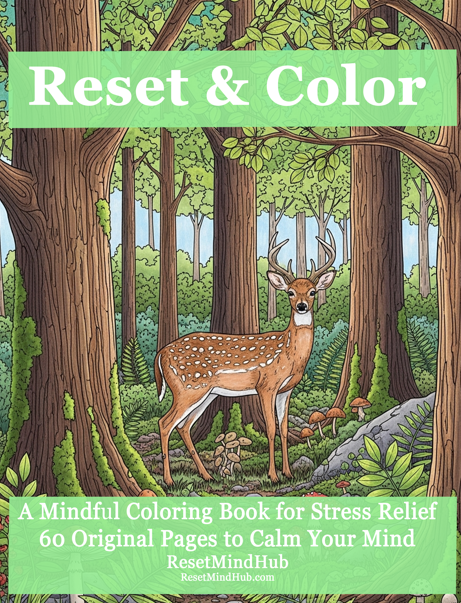
Ready to start your coloring practice? The Reset & Color Mindful Coloring Book from ResetMindHub features 60 original pages across 6 calming themes — designed specifically for adult stress relief.
Get your copy on Amazon | Download 5 free sample pages at ResetMindHub.com




Pingback: How Coloring Interrupts Rumination Cycles by Occupying Attentional Resources | lifestyle.folsomlocalnews.com/
Pingback: How Coloring Interrupts Rumination Cycles by Occupying Attentional Resources - God Of Sound - Lifestyle
Pingback: How Coloring Interrupts Rumination Cycles by Occupying Attentional Resources | lifestyle.hoteleguide.com
Pingback: How Coloring Interrupts Rumination Cycles by Occupying Attentional Resources - Business Times - Lifestyle
Pingback: How Coloring Interrupts Rumination Cycles by Occupying Attentional Resources | lifestyle.tweeternet.com
Pingback: How Coloring Interrupts Rumination Cycles by Occupying Attentional Resources | lifestyle.social-matic.com
Pingback: How Coloring Interrupts Rumination Cycles by Occupying Attentional Resources | lifestyle.successxl.com
Pingback: How Coloring Interrupts Rumination Cycles by Occupying Attentional Resources - Movie Casting Call
Pingback: How Coloring Interrupts Rumination Cycles by Occupying Attentional Resources - Webe Honey - Lifestyle
Pingback: How Coloring Interrupts Rumination Cycles by Occupying Attentional Resources - Adam Torkildson - Lifestyle
Pingback: How Coloring Interrupts Rumination Cycles by Occupying Attentional Resources | lifestyle.projectdiaspora.org
Pingback: How Coloring Interrupts Rumination Cycles by Occupying Attentional Resources | lifestyle.hungrybear.net
Pingback: How Coloring Interrupts Rumination Cycles by Occupying Attentional Resources | lifestyle.mediatrainingforceos.com
Pingback: How Coloring Interrupts Rumination Cycles by Occupying Attentional Resources - NewsBlazeIN - Lifestyle
Pingback: How Coloring Interrupts Rumination Cycles by Occupying Attentional Resources | lifestyle.brickvest.com
Pingback: How Coloring Interrupts Rumination Cycles by Occupying Attentional Resources | lifestyle.goodsciencing.com
Pingback: How Coloring Interrupts Rumination Cycles by Occupying Attentional Resources | lifestyle.tvshowauditions.info
Pingback: How Coloring Interrupts Rumination Cycles by Occupying Attentional Resources | lifestyle.nextmentors.com
Pingback: How Coloring Interrupts Rumination Cycles by Occupying Attentional Resources | lifestyle.trondstidkontroll.com
Pingback: How Coloring Interrupts Rumination Cycles by Occupying Attentional Resources | lifestyle.getpetsavvy.com
Pingback: How Coloring Interrupts Rumination Cycles by Occupying Attentional Resources | lifestyle.socialsinsider.com
Pingback: How Coloring Interrupts Rumination Cycles by Occupying Attentional Resources | lifestyle.onlygolfnews.com
Pingback: How Coloring Interrupts Rumination Cycles by Occupying Attentional Resources - Wired News Engine - Lifestyle
Pingback: How Coloring Interrupts Rumination Cycles by Occupying Attentional Resources - Spiritual Quotes - Lifestyle
Pingback: How Coloring Interrupts Rumination Cycles by Occupying Attentional Resources | lifestyle.capitolhilltimes.com
Pingback: How Coloring Interrupts Rumination Cycles by Occupying Attentional Resources | Middletown Life
Pingback: How Coloring Interrupts Rumination Cycles by Occupying Attentional Resources - Awesome - Lifestyle
Pingback: How Coloring Interrupts Rumination Cycles by Occupying Attentional Resources | lifestyle.gooddecisions.com
Pingback: How Coloring Interrupts Rumination Cycles by Occupying Attentional Resources | lifestyle.d-h.st
Pingback: How Coloring Interrupts Rumination Cycles by Occupying Attentional Resources | lifestyle.infotechinc.net
Pingback: How Coloring Interrupts Rumination Cycles by Occupying Attentional Resources | lifestyle.onebyfourstudio.com
Pingback: How Coloring Interrupts Rumination Cycles by Occupying Attentional Resources - Reipet - Lifestyle
Pingback: How Coloring Interrupts Rumination Cycles by Occupying Attentional Resources | lifestyle.fictiontalk.com
Pingback: How Coloring Interrupts Rumination Cycles by Occupying Attentional Resources - Blerp - Lifestyle
Pingback: How Coloring Interrupts Rumination Cycles by Occupying Attentional Resources - Altius - Lifestyle
Pingback: How Coloring Interrupts Rumination Cycles by Occupying Attentional Resources - Axcess News - Lifestyle
Pingback: How Coloring Interrupts Rumination Cycles by Occupying Attentional Resources - Maui Sky - Lifestyle
Pingback: How Coloring Interrupts Rumination Cycles by Occupying Attentional Resources - Cultural Foundation
Pingback: How Coloring Interrupts Rumination Cycles by Occupying Attentional Resources - Quebec News Tribune - Lifestyle
Pingback: How Coloring Interrupts Rumination Cycles by Occupying Attentional Resources - Roboearth - Lifestyle
Pingback: How Coloring Interrupts Rumination Cycles by Occupying Attentional Resources - Annika Bansal - Lifestyle
Pingback: How Coloring Interrupts Rumination Cycles by Occupying Attentional Resources - Gold Mining News - Lifestyle
Pingback: How Coloring Interrupts Rumination Cycles by Occupying Attentional Resources - Baret News - Lifestyle
Pingback: How Coloring Interrupts Rumination Cycles by Occupying Attentional Resources - lifestyle.childcarepartnerships.org
Pingback: How Coloring Interrupts Rumination Cycles by Occupying Attentional Resources - A Green Sign - Lifestyle
Pingback: How Coloring Interrupts Rumination Cycles by Occupying Attentional Resources - lifestyle.entreprenerd.net