How can I practice mindfulness quickly at my desk?
Incorporate a mindfulness breathing technique. Take a deep breath, hold for three seconds, then exhale slowly. This simple practice engages your parasympathetic nervous system, reducing stress and improving focus—ideal for customer service pros needing a quick reset.
What is a quick exercise to release tension while sitting?
Try progressive muscle relaxation. Tense each muscle group for a few moments, then release. This neuromuscular technique calms the central nervous system, releasing physical tension and mental stress. Customer service professionals can use this hack to quickly feel more relaxed and focused during calls.
Is there an immediate way to boost my mood during a stressful shift?
Engage in laughter therapy by watching a short, funny video. Laughter triggers endorphin release, a neurochemical response that elevates mood and diminishes stress. For customer service reps needing a swift morale boost, a minute of genuine laughter can work wonders.
The customer service profession is often characterized as a high-pressure environment, a veritable pressure cooker where demands are constant and customer expectations are paramount. Customer service pros, whether in a bustling call center or a dynamic contact center, are on the front lines, tasked with resolving issues, managing complaints, and maintaining brand reputation. This relentless cycle, amplified by high call volume and the emotional labor involved in every customer interaction, can significantly elevate stress levels.
For call center agents, the daily reality of performance metrics, back-to-back calls, and the need for immediate solutions contributes to an environment ripe for burnout. The cumulative effect of this sustained pressure impacts not only the individual’s mental and physical health but also the overall customer experience they deliver. Recognizing and addressing this pervasive stress is not just about agent well-being; it’s crucial for business success, as high attrition costs in contact centers, sometimes costing up to $20,000 per agent replacement, underscore the importance of retention and a supportive work environment.
This article offers a toolkit of minute-long stress relief hacks designed specifically for customer service professionals to find immediate calm and build lasting resilience.
The Science of Quick Calm: How Momentary Interventions Work
 This diagram illustrates how a minute-long intervention can shift the body from a ‘fight or flight’ stress response to a ‘rest and digest’ state of calm.
The effectiveness of short, targeted interventions in managing stress lies in their ability to interrupt the body’s physiological stress response. When faced with a challenging customer interaction or a surge in calls, the sympathetic nervous system activates, triggering the “fight or flight” response. This releases hormones like cortisol and adrenaline, leading to increased heart rate, shallow breathing, and heightened tension – physiological responses that, while useful in genuine emergencies, are counterproductive in the daily grind of customer service.
Minute stress relief hacks work by activating the parasympathetic nervous system, the body’s natural relaxation system. Techniques like deep breathing stimulate the vagus nerve, which signals the brain to calm down. Even brief moments of mindfulness can help regulate the amygdala, the brain’s fear center, and improve focus. Short bursts of physical movement can release endorphins, mood-boosting neurochemicals, while engaging sensory input can provide a quick mental escape.
These interventions, though brief, are scientifically grounded in our understanding of stress physiology and psychology, offering a tangible way to manage stress levels, improve mental health, and build resilience against burnout. While it’s important to note that as many as 75% of workers report experiencing mental health challenges [LIMRA, 2024], and over half of employees have above-average stress levels [WTW, 2024], these micro-hacks provide immediate tools for personal stress management.
Stress feels different for everyone. What's your type?
Take the free 2-minute Stress Reset Assessment and find out.
Take the Free Stress Test →Category 1: Instant Physiological Resets (Breathing & Body)
These techniques focus on direct physiological regulation, using your own body to quickly de-escalate stress responses.
The 60-Second Deep Breathing Exercises: Simple, quick techniques to calm the nervous system.
When stress surges, breathing often becomes shallow and rapid. Reclaiming control of your breath is a powerful way to signal calm to your nervous system.
- Box Breathing (4-4-4-4): Inhale slowly through your nose for a count of four. Hold your breath for a count of four. Exhale slowly through your mouth for a count of four. Hold the exhale for a count of four. Repeat for 60 seconds. This rhythm helps regulate your heart rate and promotes relaxation.
- Diaphragmatic Breathing: Place one hand on your chest and the other on your belly. Inhale deeply through your nose, feeling your belly expand outwards – your hand on your belly should rise more than the hand on your chest. Exhale slowly through your mouth, drawing your belly button towards your spine. This ensures you are engaging your diaphragm, leading to more efficient oxygen intake and a deeper relaxation response.
The Micro-Stretch & Shake-Out: Releasing physical tension accumulated from long hours and ergonomic seating.
Prolonged sitting and the tension from stressful calls can lead to stiffness and discomfort. Quick physical releases can make a significant difference.
- Neck and Shoulder Rolls: Gently drop your chin towards your chest, then slowly roll your right ear towards your right shoulder, then back to center, and finally your left ear towards your left shoulder. Repeat several times. Follow with slow, deliberate shoulder rolls, forward and then backward.
- Wrist and Finger Flex: Extend your arms forward and make loose fists, then spread your fingers wide. Repeat this flexing and extending motion for 30 seconds. This helps release tension often held in the hands and forearms.
- The Shake-Out: Stand up if possible, or simply shake your arms and legs vigorously for 15-20 seconds. Imagine shaking off the stress and tension with each movement.
Hydration & Snack Mini-Boost: Quick ways to re-energize and stabilize.
Dehydration and fluctuating blood sugar can exacerbate feelings of fatigue and irritability. A swift nutrient or hydration boost can re-stabilize your system.
- Sip and Breathe: Keep a water bottle at your desk. Take a few deliberate sips of water while practicing a few deep breaths. The act of drinking and breathing simultaneously combines two calming actions.
- Nutrient-Dense Bite: Keep a small, healthy snack like a handful of almonds, a piece of fruit, or a small yogurt within reach. Consume it mindfully over a minute or two, focusing on the taste and texture, to prevent energy crashes.
Category 2: Sensory & Environmental Micro-Adjustments
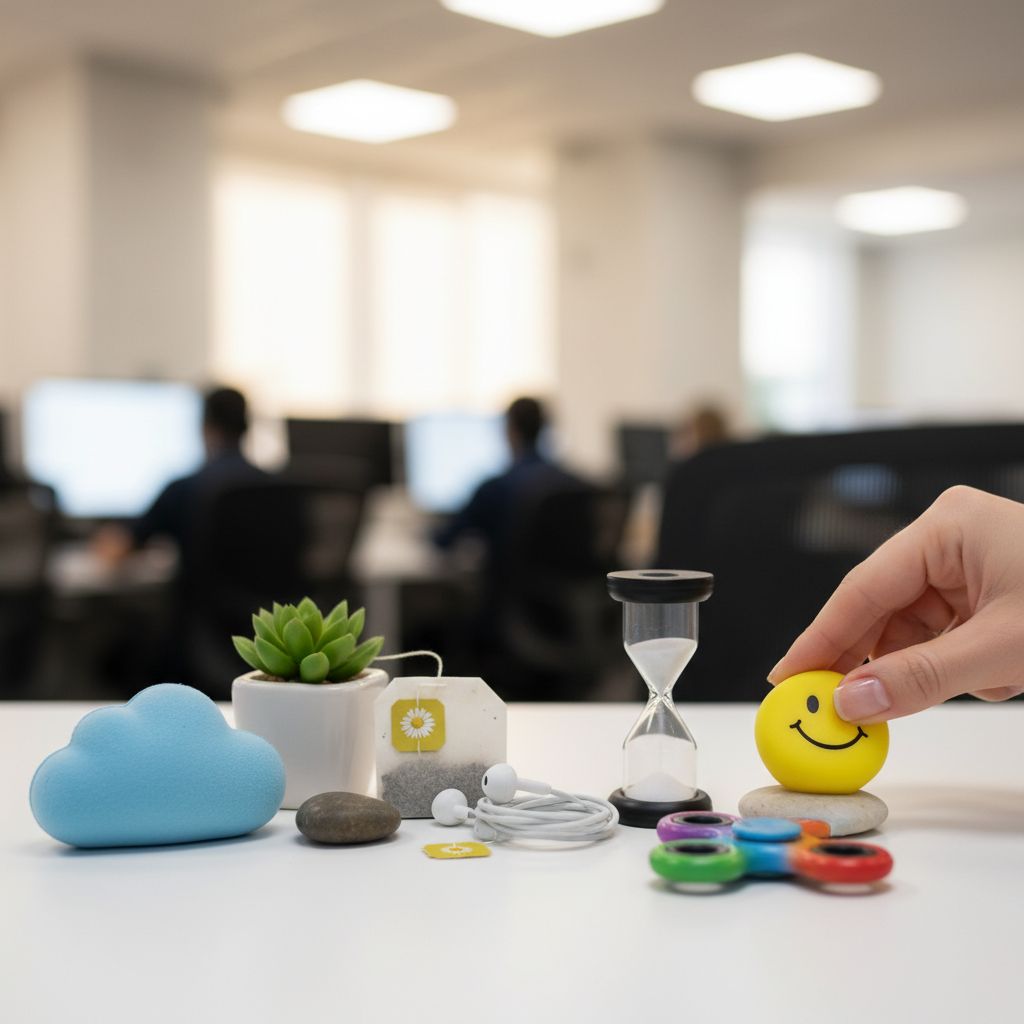
Sometimes, a simple shift in your sensory input can provide a much-needed mental break and reduce immediate stress.
Auditory Oasis: Creating brief moments of peace through sound.
Sound can profoundly influence our mood and stress levels. Even in a busy contact center, you can create mini-auditory respites.
- Nature Sounds: Use earbuds to play a short (60-90 second) loop of calming nature sounds like rain, ocean waves, or forest ambiance. This can transport your mind away from the immediate stress.
- Calming Music Snippet: Choose a short instrumental piece or a favorite calming song. Listen with intent for a minute, focusing solely on the melody and rhythm.
Visual Refresh: Shifting focus to visually calming elements.
Your eyes process a lot of information. Directing your gaze intentionally can offer a visual reprieve.
- Focus Shift: Look away from your screen. Find an object in your line of sight that is pleasing or neutral in color. Focus on its details for 30-60 seconds, allowing your eyes to relax and your mind to momentarily disconnect.
- Nature Imagery: Keep a small potted plant or a visually appealing nature-themed photo or screensaver on your desk. Glance at it periodically, allowing your mind to wander to that scene for a brief moment.
Aromatic Anchor: Using scent for a rapid mood shift.
Aromatherapy can be a potent tool for influencing mood and reducing stress.
- Scented Hand Cream or Tissue: Keep a rollerball of essential oil (like lavender or chamomile) or a subtly scented hand cream at your desk. Apply a small amount and inhale deeply, focusing on the aroma for 30-60 seconds. You can also place a drop of oil on a tissue and keep it near your workspace.
Category 3: Mental & Emotional Reframes (Mindfulness & Mindset)
These techniques leverage the power of your mind to shift your perspective and manage stressful thoughts in the moment.
The 90-Second Mindfulness Exercise: Grounding oneself in the present moment.
Mindfulness is about intentionally bringing your attention to the present experience without judgment.
- The 5-4-3-2-1 Method: Take a moment to identify:
- 5 things you can see.
- 4 things you can touch (your desk, your clothes, your skin).
- 3 things you can hear.
- 2 things you can smell.
- 1 thing you can taste (even just the taste in your mouth). This exercise anchors you firmly in the present, pulling you away from anxieties about the past or future.
Gratitude Snapshot: A rapid shift in perspective.
Focusing on what you’re grateful for can quickly counteract negative feelings.
- Quick Gratitude List: Mentally, or quickly jot down, 1-3 things you are genuinely grateful for right now. It could be a supportive colleague, a pleasant interaction, or even a simple comfort like a warm drink. Holding these positive thoughts for even a short period can reframe your emotional state.
Thought Detachment Technique: Managing intrusive or stressful thoughts quickly.
This technique helps you observe thoughts without getting caught up in them.
- “I’m Having the Thought That…”: When a stressful thought arises, mentally label it. Instead of thinking “I’m going to fail this call,” reframe it as “I am having the thought that I might fail this call.” This creates a psychological distance, allowing you to recognize the thought as just a thought, not necessarily a fact, and reduce its power.
The “Laugh Diary” Micro-Entry: A quick boost of positive emotion.
Humor is a powerful stress reliever. Even a moment of amusement can shift your internal state.
- Mental Recall: Think of something genuinely funny that happened recently – a joke from a colleague, a funny meme, or a humorous customer interaction (appropriately anonymized and anonymized!). Allow yourself to briefly recall the amusement. If you keep a physical or digital notebook, jotting down a single funny line or observation can serve as a reminder for future moments.
Category 4: Quick Movement & Energy Boosts
Physical action, even in small doses, can significantly impact your energy levels and stress.
The Stand-Up & Shake: A brief physical reset.
Breaking the static posture of sitting can be incredibly energizing.
- Two-Minute Standing Break: Stand up from your desk. Stretch your arms overhead, do a few torso twists, and shake out your arms and legs for about 60 seconds. This simple act can improve circulation and alertness.
Power Pose: A quick confidence hack.
Research suggests that adopting expansive postures can influence your feelings of confidence and reduce stress.
- The Wonder Woman/Superman Pose: Stand with your feet shoulder-width apart, hands on your hips, chest out, and shoulders back. Hold this pose for 60 seconds. Alternatively, stand with your arms raised overhead in a V-shape. This subtle physical change can promote feelings of power and reduce stress hormones.
Purposeful Micro-Walk: Changing scenery for a moment.
Even a very short change of environment can provide a mental reset.
- Walk to the Water Cooler (or equivalent): If possible, take a brief, brisk walk to get water, visit the restroom, or simply walk to the end of the corridor and back. Focus on your steps and your surroundings for those 60-90 seconds. This change of scenery and movement can clear your head.
Integrating Minute Hacks into Your Customer Service Workflow
The true power of these minute hacks lies in their seamless integration into the demanding customer service workflow. They are designed not to replace breaks, but to supplement them and offer relief during those high-pressure moments.
Strategic Micro-Breaks: Identifying ideal moments for intervention.
The key is to be proactive rather than reactive. Look for natural pauses:
- Between Calls: The few seconds you have after ending one interaction and before the next one connects are prime real estate for a quick breathing exercise or a mental reframe.
- During Holds: If a customer is on hold, use that unexpected downtime for a micro-stretch or a visual refresh.
- Muted Moments: If a customer interaction requires you to mute yourself temporarily, utilize those seconds for a rapid sensory adjustment or a quick energy boost.
- Brief Check-ins with a Colleague: A quick, supportive nod or a brief exchange with a colleague can provide a moment of connection and shared experience, reducing feelings of isolation and stress. Remember, these small interactions with a colleague can build a stronger team environment and improve overall morale.
It’s also beneficial for training programs to incorporate awareness of these techniques, empowering call center agents to recognize their own stress signals and deploy these tools effectively without disrupting service delivery.
Beyond the Minute: When to Seek Deeper Support
While minute stress relief hacks are invaluable for day-to-day management and building resilience, it’s crucial to acknowledge their limitations. They are tools for immediate relief and preventative maintenance, not a substitute for professional help when stress becomes overwhelming or chronic.
If you find that stress levels are persistently high, significantly impacting your mental health, physical health, or leading to symptoms of burnout such as cynicism, detachment, or a feeling of ineffectiveness, it’s time to seek deeper support. This might involve:
- Speaking with your supervisor or HR department: They may offer resources or adjustments to your work environment.
- Consulting a mental health professional: Therapists and counselors can provide strategies for managing chronic stress, anxiety, depression, and burnout.
- Utilizing employee assistance programs (EAPs): Many organizations offer confidential counseling and support services.
- Focusing on longer-term stress management strategies: This could include regular exercise, dedicated mindfulness practice, robust sleep hygiene, and building a strong social support network outside of work.
Recognizing when these quick hacks are no longer sufficient is a sign of strength and self-awareness.
Conclusion: Building a More Resilient & Balanced Customer Service Pro
The customer service profession is inherently demanding, requiring constant adaptability and emotional resilience. The pressures of high call volume, complex customer issues, and the fast-paced nature of a contact center environment can quickly lead to elevated stress levels and the risk of burnout. However, by integrating the minute stress relief hacks outlined in this article, customer service pros can arm themselves with powerful, immediate tools to navigate these challenges.
From physiological resets like deep breathing and micro-stretches to sensory adjustments, mental reframes using mindfulness, and quick physical boosts, these techniques offer practical, actionable strategies that can be deployed in seconds. They are designed to be woven seamlessly into the fabric of a busy workday, providing crucial moments of calm amidst the storm.
By consistently practicing these minute hacks, you don’t just manage immediate stress; you actively build greater resilience, enhance your mental and physical health, and contribute to a more sustainable and fulfilling career in customer support. Remember, taking these small, intentional steps is not a sign of weakness, but a strategic investment in your own well-being and your capacity to deliver exceptional customer experiences. Coupled with recognizing when to seek further support, these minute hacks empower you to become a more balanced, effective, and resilient customer service professional.