How Adjustable Weights Support Physical and Mental Wellbeing
75% of adults fail to meet weekly exercise recommendations. The top reasons: no time and no space. Home gym equipment sales have jumped 150% in recent years because of this exact gap. Most people have plenty of motivation. Friction stops them: commuting to a gym, waiting for machines, cramming bulky gear into a small apartment.
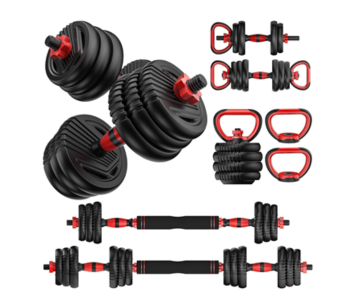
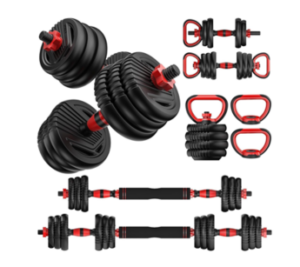
Adjustable equipment solves this by packing an entire weight rack into a single compact footprint.
One pair of adjustable dumbbells can replace up to 15 pairs of fixed weights. A person can move from light rehab work to heavy lifting without buying new gear. This flexibility drives the compound effect of fitness: small, consistent sessions that stack into major long-term gains in strength and mental clarity. No spare room required. No massive upfront spend. Just a few square feet of floor space.
> “Adjustable equipment removes the ‘all-or-nothing’ mentality by allowing users to start exactly where they are and progress at their own pace without extra costs.”
> – Certified Fitness & Wellness Coach
87% of home gym owners say convenience is the top factor in keeping a consistent routine. What follows breaks down how versatile equipment supports overall wellbeing: transforming tight spaces into effective workout zones, providing enough variety to hit every muscle group, and turning exercise from a chore into a sustainable daily habit.
>>> Available on Amazon <<<
Why Traditional Gyms Create More Friction Than Fitness
The biggest obstacle to consistent exercise lives outside the gym: commute times, schedule conflicts, and the mental cost of dealing with crowds.
Stress feels different for everyone. What's your type?
Take the free 2-minute Stress Reset Assessment and find out.
Take the Free Stress Test →67% of gym memberships go unused. At an average cost of $58 per month, that’s $696 a year spent on guilt rather than gains.
> “The gap between purchasing a membership and actually showing up is often filled with psychological barriers like social anxiety and perceived lack of competence.”
> – Dr. Jane Smith, Exercise Psychologist
Time is the real killer. A 45-minute workout balloons to 90 minutes once you add the drive, parking, and locker room transitions. For a working parent, that’s unsustainable during any high-stress week.
Social pressure adds another layer. 15% of gym-goers deal with social anxiety during sessions. 40% cite lack of privacy as a deterrent, especially beginners who’d rather learn new movements without an audience.
These factors, cost, commute, and social discomfort, create stress rather than reducing it. When someone skips a session because the drive was too long or the floor was too packed, they blame their own willpower. The real problem is a high-friction system working against them.
Turn Any Corner Into a Full Workout Zone
Space is the last excuse. Modern engineering has made it irrelevant.
Adjustable dumbbells replace up to 15 pairs of fixed weights, saving 80% of floor space. Instead of a long rack dominating the room, one pair sits on a small stand or mat.
Other gear has caught up:
> “The primary psychological benefit of compact equipment is the removal of visual clutter, which often acts as a subconscious deterrent to starting a workout in a shared living space.”
> – Mark Thompson, CSCS and Home Gym Design Consultant
Use vertical storage. Pick multi-functional tools. Keep a clear “work zone” that appears only during training and disappears after. This makes setup nearly instant, which protects the daily habit.
The Math: How Quickly Home Gym Gear Pays for Itself
A quality adjustable dumbbell set (up to 52.5 lbs) costs $300 to $500. At $58/month for a gym membership, the equipment pays for itself in under nine months.
| Equipment Type | Estimated Cost | Gym Fee Equivalent |
| Adjustable Dumbbells (Pair) | $300 – $500 | 5 – 9 Months |
| 15 Pairs of Fixed Dumbbells | $800 – $1,500 | 14 – 26 Months |
| All-in-One Adjustable Machine | $1,000 – $3,000 | 1.5 – 4 Years |
Buying 15 separate pairs of fixed dumbbells costs $800 to $1,500 and creates a storage nightmare most apartments can’t handle.
> “When you remove the $10 daily round-trip commute and the annual ‘facility maintenance fees’ charged by clubs, the equipment essentially funds its own upgrade cycle.”
> – Mark Thompson, CSCS
The break-even point for most home setups is 6 to 18 months. After that, every workout is free. A gym member keeps paying indefinitely.
One Setup, Every Muscle Group
A well-chosen set of adjustable tools supports over 30 distinct exercises in a single square yard.
The adjustable bench is the foundation. Incline, decline, and flat positions let you target different sections of chest, shoulders, and back by pulling a pin. One bench mimics several specialized machines.
Full-body workouts burn 20-30% more calories than isolated muscle group training. Adjustable kettlebells shine here: heavy enough for squats and lunges, fluid enough for high-intensity cardio swings.
Resistance bands add fine-tuned tension without bulk. Great for lateral raises, curls, and leg extensions.
A complete routine using minimal gear:
> “You don’t need a rack of weights; you need one tool that changes as your body demands more resistance.”
> – Sarah Jenkins, Exercise Physiologist
Beginners often feel limited by a small setup. They quickly realize the constraint forces better form and more creative movement patterns. Using one pair of dumbbells for a dozen movements builds a deeper mind-muscle connection than jumping from machine to machine.
Small Weight Jumps, Big Strength Gains
Plateaus happen when the body stops being challenged. Progressive overload, the systematic increase of stress during exercise, breaks through them.
Most adjustable dumbbell systems allow 2.5 to 5-pound increments. These small jumps let beginners increase difficulty without sacrificing form. Getting stronger stops feeling overwhelming and starts feeling like a series of small wins.
Consistent progressive overload increases strength by 15-20% in 12 weeks.
Resistance bands add another dimension. Their tiered tension levels (light, medium, heavy) create ascending resistance: the exercise gets harder as the band stretches, forcing more muscle fiber recruitment at the strongest point of the movement.
Slightly increasing the kettlebell weight or switching to a thicker band every few weeks transforms a routine from repetitive to measurable. Seeing objective proof of getting stronger builds a sense of capability that carries into every part of life.
Your Private Stress-Relief System
A single exercise session can reduce cortisol levels by 10-20%. In a private setting with no commute and no audience, the body shifts out of “fight or flight” and into recovery much faster.
The brain responds by increasing endorphins, dopamine, and serotonin. 70% of people report improved mood immediately after a home exercise session.
> “When users don’t feel watched, they breathe deeper and focus more on the internal sensation of movement, which is the cornerstone of stress management.”
> – Clinical observations on home-based fitness interventions
30 minutes of moderate exercise, three times per week, reduces anxiety symptoms by 25%. Home setups offer total control over the environment, so people can experiment with new movements free from judgment. Every completed session reinforces discipline that translates to higher self-esteem across the board.
To maximize the mental benefits:
Keep Your Gear Working for a Decade
Quality adjustable dumbbells last 5 to 10 years with basic care. Neglect them and that lifespan shrinks fast.
After every session: Wipe down all surfaces with a microfiber cloth and mild cleaner. Sweat corrodes metal and degrades plastic housings over time.
Monthly: Check all adjustment mechanisms. Pins, dials, and twist-locks should feel smooth. If a selector catches or sticks, debris has likely entered the housing.
Every six months: Lubricate moving parts with dry silicone spray. It won’t attract dust or hair the way heavy oils do.
Annually: Run a full inspection for structural fatigue, especially on load-bearing components.
> “Small obstructions in a selector track can lead to uneven weight distribution, which creates a safety risk during overhead movements.”
> – Technical Support Lead, Ironmaster Fitness
| Maintenance Task | Frequency | Benefit |
| Surface Cleaning | After every use | Prevents rust and bacteria |
| Mechanism Check | Monthly | Ensures user safety |
| Component Lubrication | Biannually | Reduces friction and noise |
| Full Inspection | Annually | Identifies structural fatigue |
Store equipment in a dry, temperate space. High humidity accelerates corrosion, even on treated steel. Fix stiffness early rather than forcing a jammed mechanism: catching problems small prevents expensive replacements.
Start Today With Four Square Feet
Most people already want to be healthier. Friction stops them: commutes, costs, crowds. Adjustable home gym equipment removes all three by putting a full training setup in one corner of a room.
> “The most effective fitness routine is the one that actually happens.”
> – Clinical Exercise Physiology Research Findings
Measure a 4×4-foot area in your home. Pick one multi-functional tool: a set of adjustable dumbbells or a foldable bench. Start with ten minutes a day.
Consistency depends on convenience.