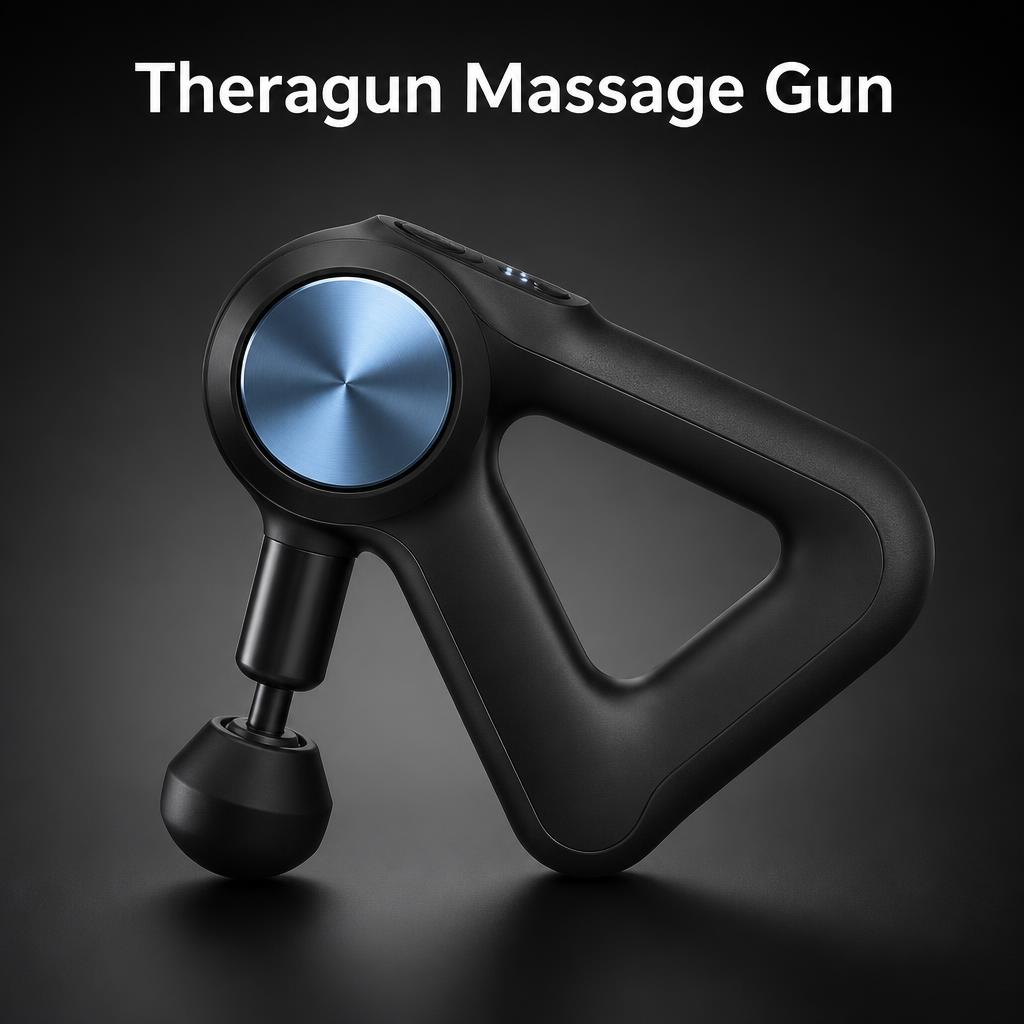
Stress isn’t just in your head anymore. Here we feature Therabody’s Award-Winning Theragun. For most people, it lives in the body: tight shoulders, a clenched jaw, a stiff lower back. US adults report an average stress level of 5.1 out of 10. And 77% experience physical symptoms of that stress on a regular basis.
When your mind is racing and your schedule is packed, those physical knots go untreated. Pain feeds overwhelm. Overwhelm feeds more pain.
The Theragun, created by Therabody, breaks that cycle through percussive therapy: rapid, repetitive pulses that reach deep into muscle tissue and mimic the effects of a professional massage. No appointment needed.
Originally built for elite athletes, the device is now widely used by people dealing with “office worker’s neck” or tension headaches after a long day. It gives you a way to address the physical side of anxiety from your living room, bridging physical recovery and mental relaxation.
> “The body keeps a meticulous record of every stressful event, often storing that energy as muscular guarding and tension. Tools that provide physical release can be a gateway to calming the nervous system.
> – Clinical Perspective on Somatic Stress
Stress feels different for everyone. What's your type?
Take the free 2-minute Stress Reset Assessment and find out.
Take the Free Stress Test →Here you’ll learn how the Theragun quiets tense muscles and helps your body shift out of “fight or flight.” You’ll see the science behind muscle tension, how to pick the right model for a busy lifestyle, and how to build percussive therapy into a wider self-care routine.
The goal: small, achievable sessions of physical relief that lower your overall stress. Think of this technology as a supportive partner in a broader plan for resilience and long-term calm.
Try this today: Find one area where you hold tension – the tops of your shoulders or the arches of your feet. Spend two minutes noticing how it feels during a stressful moment. That awareness is the first step toward intentional relief.
Why Your Body Holds Onto Tension
Your body doesn’t know the difference between a looming work deadline and a physical threat. When you hit a stressor, your brain triggers the “fight or flight” response – a cascade that floods your system with cortisol, spikes your heart rate, and diverts energy to your limbs. One of the most immediate effects: sustained muscle contraction. Your body braces to defend itself or run.
The problem? Modern life keeps that alarm on indefinitely. Chronic stress prevents your muscles from getting the signal to relax. They stay contracted. 80% of adults experience back pain at some point, often made worse by this persistent strain. When muscles stay shortened and tight for days or weeks, they compress nerves and restrict blood flow. Temporary “tightness” becomes chronic pain, and willpower alone won’t fix it.
Most people store tension in predictable “stress-holding” zones:
> “The physical body is a scoreboard for the mind’s burdens. When we don’t process emotional stress, the musculoskeletal system bears the weight, resulting in what we perceive as ‘knots’ or ‘stiffness’ – actually neurological signals.”
> – Dr. Elena Rossi, Clinical Psychologist
Understanding these roots shifts your perspective from “my back hurts” to “my nervous system is overwhelmed.” That shift is why a physical intervention like percussive therapy works so well. By targeting the specific muscle groups most affected by cortisol-driven contraction, you can manually override the “fight or flight” signal.
Try this today: Sit quietly for 60 seconds and scan the four areas listed above. Find which one feels heaviest. Take three deep breaths directed into that specific muscle to start the process of intentional release.
How Theragun Quiets Tense Muscles
Unlike a standard vibrating massager that skims the skin’s surface, a Theragun uses a high-torque motor to deliver rapid, vertical strokes. These impacts hit at 40 pulses per second, creating rhythmic pressure that reaches 16mm deep into muscle tissue. That depth matters because stress-induced knots often sit in the deeper layers of fascia, where surface-level rubbing can’t reach.
The relief relies on the gate control theory of pain. By flooding the brain with non-painful touch signals through high-frequency percussion, the device “closes the gate” on discomfort signals traveling from tight fibers. You feel immediate relief, even if the underlying stressor remains. A mechanical reset for your nervous system when your mind is too loud to settle on its own.
Local blood flow can increase by up to 20% during use. This circulation surge flushes out metabolic waste that builds up when muscles stay contracted for hours. The QX150 motor – designed for quiet operation – drives the attachment into tissue and creates a pump-like effect. Fresh oxygenation helps soft tissues return to a neutral state, which is why research shows measurable reduction in muscle stiffness within 5 to 10 minutes.
> “The physiological shift provided by percussive therapy moves the body from guarded tension to receptive calm, making it significantly easier for a person to then engage in mental relaxation techniques.”
> – Dr. Aris Thompson, Sports Physiologist
The device also stimulates specialized sensory receptors called Golgi tendon organs. These monitor muscle tension and, when triggered by the Theragun’s specific amplitude and frequency, signal the brain to stop further contraction. A direct, physical conversation with your body’s internal sensors. If your shoulders rise toward your ears throughout the day, a two-minute targeted session can override that involuntary urge to clench.
Try this today: Find the spot where you feel the most “weight” right now – perhaps between your shoulder blades. Apply a damp cloth with light heat for three minutes before your next relaxation session to prime the tissue for deeper relief.
Finding the Right Model for Your Needs
Choosing a device for stress management is different from choosing one for athletic recovery. If you’re after mental calm, prioritize sensory comfort and ease of use over maximum force. Picking the wrong model often means a device that sits in a drawer because it’s too loud, too heavy, or too intense for a quiet evening wind-down.
Comparing the Lineup
The Theragun Sense ($299) is the standout choice for the mind-body connection. It’s the first model built with a focus on quiet operation and guided breathwork routines, bridging physical massage and meditative practice. Ideal for a bedside table.
The Theragun PRO ($599) is the heavy hitter – professional-grade power with an adjustable arm. Its intensity and price may be overkill if you’re simply softening shoulder tension after a day at a desk.
The Theragun Mini ($199) suits frequent travelers or those with limited space. It’s 20% smaller than the standard frame with a 150-minute battery life. Great for a desk drawer and quick micro-breaks during high-pressure shifts. It lacks the advanced sensor technology of the Sense model, though.
| Model | Primary Benefit | Price | Key Feature |
|——-|—————-|——-|————-|
| Theragun Sense | Guided Stress Relief | $299 | Quiet operation and heart rate sensor |
| Theragun Mini | Portability | $199 | 20% smaller than standard models |
| Theragun PRO | Deep Tissue Power | $599 | 6 attachments and adjustable arm |
Attachments for Sensitive Areas
The attachment head matters just as much as the motor when working on stress-holding areas like the neck or jaw. A hard plastic tip on a tension headache can backfire, triggering a defensive “guarding” response. QuietForce Technology cuts noise by 50% compared to older versions, and the right attachment determines whether the experience feels soothing or jarring. Start with the Supersoft attachment for any work near the upper neck or temples.
The goal: create a ritual your nervous system welcomes. If the device feels like a power tool, your mind stays alert. A quieter model with a softer attachment signals safety and rest.
Try this today: If you already own a device, swap to the softest attachment available and spend two minutes on the soles of your feet before dinner. Signal to your brain that the workday is over.
Using Your Theragun to Unwind
Progressive relaxation research shows that systematically releasing physical tension pulls the mind into calm. Using percussive tools for stress management calls for a gentler touch and intentional pacing. Build this into a nightly routine, ideally 30 minutes before bed, to signal your nervous system that the day’s demands are done. Evidence suggests daily use for 5-10 minutes can reduce perceived stress by 15%.
A Five-Minute Wind-Down Routine
Start with the large muscle groups that carry a long day’s weight. Guide the device across each shoulder and the upper back for 30 to 60 seconds. Let the machine’s weight do the work rather than pressing down hard. Avoid direct contact with bones or the spine. Focus on the fleshy trapezius muscles where tension shows up as heaviness or tightness.
For jaw tension or stress headaches, apply the dampener or cone attachment to the masseter muscle – just below the cheekbone – on the lowest speed setting. Move in tiny, circular motions around the temples and jawline for 30 seconds.
> “The goal of using percussive therapy for relaxation is to provide soothing sensory input that helps the brain recalibrate its perception of pain and tension.”
> – Clinical Observation on Somatic Relief
Consistency beats duration. Short, daily bursts of 30-60 seconds per muscle group create a reliable reset button for the body. This physical intervention lets you shift from workday energy into a space where deeper mental recovery becomes possible.
Connecting Physical Relief to Mental Calm
When your body stays on high alert, your brain struggles to register safety. Tight muscles signal threat. The brain stays wired. A feedback loop forms.
Percussive therapy interrupts those signals from the ground up, using physical release to quiet a racing mind.
The data backs this up: 70% of people report improved sleep after regular massage therapy. When muscle fibers relax, the brain receives fewer distress signals, allowing a deeper transition into rest. Better sleep lowers cortisol by 10-20%, cutting the chemical baseline of stress you carry through your workday.
> “The relationship between body and mind is bidirectional. When we provide the nervous system with rhythmic, predictable sensory input, we aren’t just treating a knot in the shoulder; we are signaling to the brain’s emotional centers that it is safe to downregulate.”
> – Dr. Elena Rossi, Clinical Psychologist
These tools may also improve heart rate variability (HRV), the variation in time between heartbeats. Higher HRV means better stress resilience. Reducing muscle tension decreases sympathetic activity and lets the parasympathetic “rest and digest” system take over. This shift builds long-term emotional durability against daily pressure.
Adding these sessions to a broader plan – which might include mindfulness or professional therapy – turns the device from a simple massager into a tool for somatic work. It gives you a tangible sense of control over physical discomfort, often the first step in reclaiming mental space from anxiety. Knowing that a small goal of physical relief is achievable can break the paralysis that overwhelming stress creates.
Try this today: Find one area where you feel “armored” or braced – your hips or upper back. Spend two minutes using a dampening attachment on that area while focusing on slow exhales. Notice if your internal “volume” of worry drops along with the physical tightness. 87% of users report feeling more grounded after focused sessions like this.
How It Stacks Up Against Other Methods
In 1929, physician Edmund Jacobson published Progressive Muscle Relaxation, teaching patients to systematically tense and release muscle groups to fight anxiety. The tools available have expanded considerably since then. Here’s how percussive therapy compares.
Percussive Therapy vs. Foam Rolling
Foam rollers ($20-$50) rely on static pressure and body weight to compress tissue. They demand physical effort and floor space, which can feel counterproductive when the goal is to lower stress. A Theragun delivers rapid pulses that reach deeper without requiring you to roll around on the ground. Foam rollers cover broad surface area well; they lack the precision needed for specific stress knots in the neck or traps.
| Feature | Foam Roller | Theragun |
|———|————|———-|
| Mechanism | Static Compression | Percussive Pulse |
| Average Cost | $20-$50 | $199-$599 |
| Effort Level | High (Active) | Low (Passive) |
| Targeting | Broad/General | Precise/Localized |
Professional Massage
Professional massage remains the gold standard, yet it comes with barriers: cost ($80-$150 per session), scheduling, and privacy. A Theragun can pay for itself in three to five uses. The device gives you immediate relief at any hour. For complex, chronic issues that need a diagnostic eye, professional bodywork is still the better choice.
Pairing With Mindfulness
Mindfulness apps ($5-$15/month) focus on “top-down” stress management through cognitive reframing. They work well, yet they can frustrate someone whose body is stuck in “fight or flight.” Percussive therapy works from the “bottom up,” addressing the physical alarm bells first and making it easier to sit still for a ten-minute meditation. Using both creates a more complete routine than either one alone.
Try this today: If you use a meditation app, try two minutes on your shoulders with the Theragun before your next session. Notice if physical release makes it easier to focus on your breath.
Overcoming Roadblocks to Consistent Use
40% of new wellness device owners stop using their tools within three months. The initial excitement fades. The device ends up in a drawer. And consistency is the only bridge between owning a recovery tool and actually getting the long-term nervous system benefits.
Lack of time is the primary barrier for 60% of adults seeking stress relief. The fix: habit stacking. Attach this new behavior to something you already do automatically. Use the device for two minutes right after brushing your teeth or while the coffee brews. No extra willpower needed.
> “The most effective stress management tool is the one you actually use. We see a significant shift in resilience when people move from ‘as-needed’ crisis management to small, daily habits that signal safety to the brain.”
> – Clinical Perspective on Behavioral Adherence
Setting a specific time for use increases adherence by 30%. Schedule sessions as non-negotiable appointments rather than waiting for peak stress. The Therabody App provides personalized guidance and tracking to help you see progress and avoid the common pitfall of being unsure which attachment to use or how much pressure to apply.
Practical fixes for common hurdles:
Try this today: Pick one habit you do every evening – like plugging in your phone. Use the Theragun on one shoulder for 60 seconds right after. Start building your consistency muscle.
The Bottom Line
Physical tension and mental stress are two sides of the same coin. When your body stays in “fight or flight,” muscles tighten as a protective reflex, and that physical discomfort feeds right back into mental anxiety. The Theragun interrupts that loop by manually shifting muscles from contraction to release. That physical shift tells your nervous system the threat has passed, and the mind follows.
Percussive therapy reduces muscle stiffness by up to 50% compared to rest alone. That reduction in physical armor makes it easier to engage in practices like deep breathing or meditation. Consistent use can lead to a measurable drop in cortisol. The technology is advanced; the benefit is simple: a reliable way to physically unplug when your mind feels too busy to settle.
People who treat the device as a mindful ritual – focusing on breath while the motor works on a tight muscle – see the most lasting changes in resilience. Those few minutes are a chance to check in with your body and acknowledge where stress lives. That awareness is the first step toward long-term emotional regulation.
Try this today: Find the one spot where tension usually starts – the tops of your shoulders or the arches of your feet. Set a timer for 60 seconds and use the Theragun on that area while taking slow, deep breaths through the nose. One small physical reset in a busy schedule.
Physical ease builds the foundation for mental clarity.