Strap a tracker to your wrist and you’ll likely walk 1,500 more steps a day. Learn How Fitness Trackers and Smartwatches Help with your health and wellbeing. That alone adds up to roughly one extra mile of movement every 24 hours, without a gym membership, a coach, or a plan.
That’s the quiet power of wearable tech. It turns invisible habits into visible data. And when you can see what your body is doing, you start making better choices, almost automatically.
The global wearable market is projected to hit $138 billion by 2028. But the real number that matters is this: 70% of users report increased physical activity after they start wearing a tracker.
Here’s what these devices actually do for your wellbeing, and how to get the most from them.
<<< Available on Amazon <<<
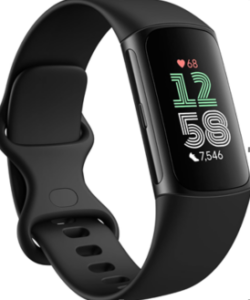
Close Your Activity Rings Every Day
Most people start a fitness routine with vague goals. “Move more.” “Get healthier.” A wearable turns that fog into a clear visual mission.
Smartwatches break daily movement into three rings: Move, Exercise, and Stand. Watching a partial circle close throughout the day creates small wins that reinforce your identity as someone who takes care of their body. This gamification approach increases user engagement by roughly 30% compared to traditional goal-setting.
Consistency is the hard part. Trackers solve it with gentle nudges: a vibration reminding you to stand each hour, a notification when you’re close to your step target.
Stress feels different for everyone. What's your type?
Take the free 2-minute Stress Reset Assessment and find out.
Take the Free Stress Test →How to get the most from activity rings:
Small, consistent efforts compound. A simple digital circle becomes a powerful feedback loop for long-term health.
Track Your Sleep Stages for Better Rest
You know you feel better after a full night of sleep. But what happens during those hours usually stays hidden.
Wearable sensors detect movement and pulse changes to sort your rest into light, deep, and REM stages. The average adult needs 7 to 9 hours, but quantity alone doesn’t tell the full story. A tracker might show you spent eight hours in bed but only six hours asleep due to frequent micro-awakenings.
60% of users report better sleep awareness after reviewing these metrics.
Deep sleep handles physical restoration and immune health. REM sleep supports memory and emotional processing. Many devices combine these factors into a sleep score (1 to 100) so you can track improvements over time.
Small changes that improve your sleep score:
Monitor Your Heart Rate Around the Clock
Continuous heart rate tracking gives you a real-time window into your cardiovascular system. Optical sensors shine green light through the skin, measuring blood flow to calculate beats per minute, no chest strap needed.
Resting heart rate (RHR) is one of the most useful metrics. A lower RHR usually means a more efficient heart. Track it over weeks and you’ll see how fitness gains, illness, or overtraining shift the number.
1 in 4 people over 40 will develop Atrial Fibrillation (AFib), an irregular heart rhythm that can lead to blood clots or stroke. Many smartwatches now include irregular rhythm alerts or on-demand ECG apps that catch what a single office visit might miss.
| Metric | What It Measures | Health Insight |
| Resting Heart Rate | Beats per minute at rest | General fitness and recovery |
| SpO2 | Blood oxygen saturation | Respiratory and lung health |
| ECG/AFib Alerts | Electrical heart signals | Potential arrhythmia detection |
These tools are not replacements for professional medical equipment. If your device flags an irregular rhythm or an unexpected heart rate spike, treat it as a prompt to see your doctor. The value is in catching issues early and bringing objective data to the appointment.
Use Guided Breathing to Manage Stress
Open the mindfulness app on your smartwatch, select a timed session, and follow the prompts to inhale and exhale. That’s the shift from passive data collection to active stress management.
The key metric here is Heart Rate Variability (HRV): the time variation between each heartbeat. Higher HRV generally means your body handles stress well. Lower HRV signals your nervous system is under strain.
Many devices use haptic feedback (small wrist vibrations) to guide breathing exercises lasting one to five minutes. 45% of users report improved stress management after consistently using these prompts.
By reviewing your day’s HRV data, you can pinpoint exactly which moments, a commute, a meeting, a late night, caused the biggest physiological spikes. That awareness turns a smartwatch into a tool for building emotional resilience through small, consistent interventions.
Track Progress for Weight Loss and Fitness Goals
Users with clear, documented goals are 3x more likely to succeed in their fitness plans than those relying on vague intentions.
Smartwatches turn abstract desires into concrete metrics: calorie burn estimates, distance tracking, heart rate zones, workout duration. Seeing incremental progress on your wrist reinforces self-belief and keeps motivation high during the tough middle weeks of a new routine.
How to turn raw data into a personal roadmap:
Instead of a pass-or-fail mentality, look at your 30-day trend. One missed session matters far less when you can see the overall trajectory moving in the right direction.
Connect Your Wearable to Health Apps
A smartwatch captures raw data. Its real power shows up when that data connects to a broader ecosystem.
Syncing with platforms like Apple Health, Google Fit, or MyFitnessPal creates a single dashboard for sleep, nutrition, activity, and stress. A unified view of personal health data improves goal adherence by 20%.
| Integration Type | Common Platforms | Primary Benefit |
| System Aggregators | Apple Health, Google Fit | Unified dashboard for all health metrics |
| Nutrition & Diet | MyFitnessPal, Lose It! | Automated calorie and macro balancing |
| Mental Wellness | Calm, Headspace | Biofeedback-driven stress reduction |
<<< Available on Amazon <<<
Key benefits of a connected ecosystem:
This connectivity separates a basic step counter from a professional-grade health monitor.
Fitness Tracker vs. Smartwatch: Which One Fits Your Life?
Choosing the wrong device leads to a drawer full of unused electronics. The right choice depends on matching your daily reality to the right hardware.
| Feature | Fitness Tracker | Smartwatch |
| Price Range | $30 – $100 | $200 – $800 |
| Battery Life | 7 – 10 Days | 1 – 2 Days |
| Primary Focus | Activity & Basics | Apps & Connectivity |
| Display Style | Slim & Simple | Large & Interactive |
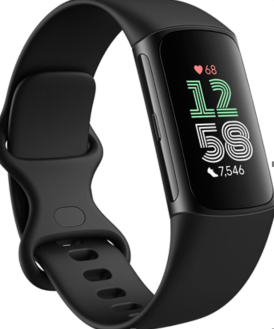
Fitness trackers (like the Fitbit Inspire 3 or Xiaomi Smart Band 8) focus on core metrics: movement, heart rate, sleep. Battery lasts 7 to 10 days. Best for people who want simplicity and find daily charging a barrier.
Smartwatches (like the Apple Watch Series 9 or Samsung Galaxy Watch 6) function as a secondary phone on your wrist. They offer ECG capabilities, app ecosystems, and phone notifications, but need charging every 1 to 2 days.
The most expensive device is not automatically the most effective one. Effectiveness comes down to how consistently you actually wear it. If notifications overwhelm you, a quiet tracker may support your wellbeing better. If you thrive on deep data and connected tech, a smartwatch will suit you.
The best device is the one that disappears into your routine rather than adding a new burden.
Start Here
Pick one metric to focus on for the first seven days: a daily step goal or a consistent bedtime.
Open the companion app on your phone. Set a Move or Stand reminder that breaks up long stretches of sitting.
Build that single habit first. Self-awareness is the foundation that makes every other health goal feel within reach.
Key takeaways:
Meaningful change starts with the simple act of paying attention.