
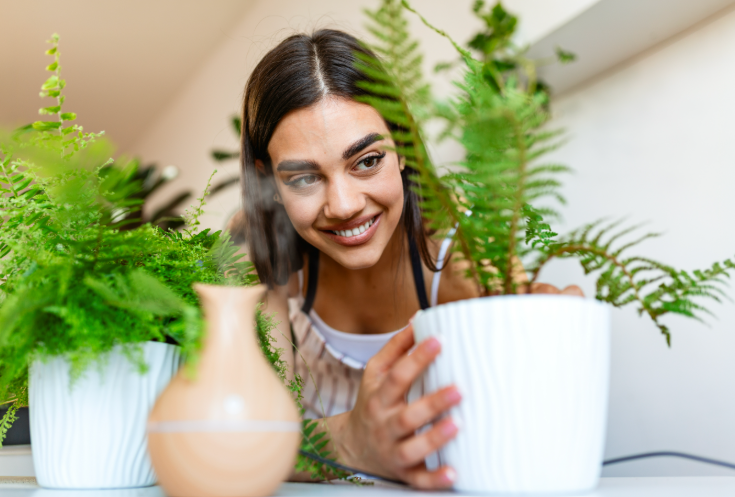
Searches for houseplant and stress relief have jumped 150% in three years, but does staring at a fern actually lower your cortisol? Science reveals a surprising twist about active care versus passive viewing – and a popular air-purifying claim that’s mostly myth.
Key Takeaways
- Indoor plants have been linked to measurable drops in cortisol and diastolic blood pressure, beyond merely a subjective sense of calm
- Actively caring for a plant, such as repotting or pruning, appears to lower stress more than simply looking at greenery across a room
- The idea that a few potted plants can meaningfully clean household air traces back to a sealed-chamber NASA experiment, not real-world room conditions
- Snake plants, ZZ plants, and pothos offer low-effort ways to build a calming routine without adding another chore to a busy week
- Plant care works best as one piece of a broader nervous-system-friendly routine worth investigating further
70% Feel Weekly Stress – Plants as Relief?
Stress shows up in most weeks for a large share of adults, and a meaningful share of them are reaching for potting soil instead of, or alongside, traditional coping tools. Some hope a windowsill of green can soften the edges of a demanding schedule, and that hope is not misplaced, but it is worth separating the appeal of a leafy corner from what actually happens inside the body when a plant enters the room.
Greenery has been linked to lower cortisol, the hormone most closely tied to the body’s stress response, by a measurable margin. Google searches for “houseplants stress relief” have climbed 150% over the past three years, a sign that this once-niche hobby has moved into the mainstream of mental health strategy. That shift deserves a closer look rather than a passing mention. Roughly 65% of new plant owners cite mental health as a top reason they started buying greenery in the first place, which suggests the driving motivation has shifted from decor to genuine self-care.
None of this means every fern or fiddle leaf fig delivers the same payoff. The type of plant, how it gets used, and how consistently it gets cared for all shape whether a home becomes calmer or just more cluttered. The sections ahead walk through the physiological evidence, the difference between watching a plant and tending one, the truth behind air-purifying claims, and which species make this hobby sustainable instead of stressful.
Cortisol and Heart Rate: The Hard Numbers
Feelings of calm around plants are grounded in real physiological changes, not merely psychological imagination. Spending time with houseplants lowers cortisol levels, the hormone the body produces under stress, and researchers have started attaching real numbers to that effect. Exposure to natural environments, including plant-filled rooms, has been linked to a 12% average reduction in perceived stress after 30 minutes, pointing to a fairly fast physiological response rather than a slow-building placebo effect.
Office environments provide some of the clearest data. Cortisol levels decreased by 5-8% in office workers with desk plants, a modest-sounding shift that adds up over a full workday spent at a desk. A 2010 study from the University of Hyogo found lower diastolic blood pressure among participants after they interacted with plants. Together, these findings describe a body shifting out of a low-grade “fight or flight” pattern and into a steadier baseline, simply from sharing space with something green and alive.
Active Care Beats Passive Viewing
Looking at a plant and tending to one appear to produce different levels of benefit, and the gap matters for anyone deciding how much time to invest. A 2015 study published in the Journal of Physiological Anthropology found that active interaction with plants, such as transplanting or pruning, suppressed sympathetic nervous system activity more effectively than passive observation or screen-based tasks. The physical act of handling soil and leaves seems to pull attention away from abstract worries and toward something immediate and tactile.
Stress feels different for everyone. What's your type?
Take the free 2-minute Stress Reset Assessment and find out.
Take the Free Stress Test →Daily gardening reinforces this pattern outside the lab as well: 30 minutes of daily gardening can lower perceived stress by 18%, a notably larger effect than simply sitting near a houseplant. Structured horticultural therapy programs, which guide participants through hands-on plant care, frequently report a 20-25% greater reduction in anxiety compared with groups that only get passive exposure to green spaces. A plant sitting quietly on a shelf still helps, but the larger reward tends to go to the person who waters, checks soil, and occasionally gets their hands dirty.
The Air Purification Myth
A lot of plant shopping still happens under the assumption that a peace lily or spider plant will noticeably clean household air, and that belief traces back to a single, often-misread study. The original NASA Clean Air Study, conducted in 1989, found that certain plants could remove volatile organic compounds like benzene and formaldehyde from the air inside sealed, airtight chambers built to mimic space station conditions. Those results were real, but the setting was nothing like a typical living room.
Modern homes exchange air constantly through windows, doors, and HVAC systems, at a rate no single potted plant can compete with. Michael Waring, an associate professor of architectural and environmental engineering at Drexel University, and his doctoral student Bryan Cummings calculated that it would take between 10 and 1,000 plants per square meter of floor space to compete with the air-cleaning capacity of a building’s air handling system, or even just a couple of open windows in a house. Reproducing the VOC reduction seen in the 1989 NASA chamber study inside an average home would likely take dozens of large specimens, turning a living room into something closer to a greenhouse. None of this erases the psychological benefits of greenery. It reflects that the calm people feel around plants has more to do with visual presence, texture, and the ritual of care than with any measurable change in air quality.
Low-Maintenance Plants for Lasting Calm
Choosing the right species matters as much as choosing to have plants at all, since a wilting, high-maintenance specimen can turn a calming hobby into a source of guilt. Beginners tend to have the best results with species built to tolerate a little neglect, since the goal is stress relief, not another obligation competing for attention.
Snake Plants: Watering Every 2-4 Weeks
Snake plants, known botanically as Sansevieria, generally need watering every 2 to 6 weeks depending on climate, light conditions, and season, and should be watered once the soil is bone dry, typically every 2-3 weeks during active growth and every 4-6 weeks in cooler months. Their thick, upright leaves are also less prone to common pests than thinner-leaved varieties, which cuts down on the kind of troubleshooting that adds stress instead of relieving it.
ZZ Plants: Weeks Without Water
The ZZ plant, or Zamioculcas zamiifolia, typically needs watering every 2 to 3 weeks, allowing the soil to dry out between waterings, and can go even longer without water in low light or during winter dormancy, all while holding its glossy, deep-green appearance even in a windowless office. That resilience makes it a strong option for anyone who travels often or works in a space with limited natural light.
Pothos: Resilient in Any Light
Pothos, scientifically Epipremnum aureum, prefers bright, indirect light but tolerates lower light levels, though its growth rate may slow and its variegation may fade in dimmer corners. It also propagates easily from cuttings, so a single healthy vine can eventually fill several pots around a home, giving new plant owners a low-risk way to expand their collection without buying more greenery.
Placement, Quantity, and Sensory Impact
Where a plant sits matters nearly as much as which plant gets chosen. Visual access appears to be the primary driver of psychological relief, meaning a fern tucked behind a couch does far less work than one placed directly within the line of sight during a stressful task. Visible greenery during high-stress tasks appears to ease perceived stress compared with plant-free settings, which makes deliberate placement worth the extra thought.
Quantity plays a role as well, and more is not automatically better. A standard-sized room tends to do well with a modest cluster of medium-sized plants, enough to create what some describe as a “green vignette” without tipping into an overwhelming maintenance load. A small office may only need a couple of plants positioned as a focal point for short breaks, while a larger open-plan space can support a fuller grouping without feeling cluttered. Sensory details matter too: soft, rounded leaves with a matte texture tend to feel more relaxing than spiky or jagged foliage, and deep green tones are generally associated with stability. Earthy fragrances, such as the scent of damp soil, are associated with grounding because they mimic natural scents that have been shown to lower stress and steady the nervous system.
Small, Consistent Care Yields Lasting Calm
The research points to a clear pattern: greenery lowers cortisol and heart rate on its own, and hands-on care tends to amplify that effect further. None of these benefits require a sprawling collection or rare, finicky species. A snake plant checked once every few weeks, a pothos vine trimmed occasionally, or a ZZ plant left alone for a month can still deliver the calm that drew someone toward indoor gardening in the first place.
The bigger risk lies in overcommitting. Taking on a plant collection that outpaces available time or energy tends to replace calm with guilt every time a leaf turns brown, which cancels out the very relief the hobby was meant to provide. Building small, sustainable habits, such as checking one or two plants during a morning coffee routine, keeps the practice restorative instead of another item competing for attention on a to-do list. For anyone ready to build a steadier daily rhythm around small, calming habits, stress-reduction routines built around simple, consistent care offer a practical place to start.